
S-shaped bonsai trees are admired for their flowing curves, balanced proportions, and strong artistic appeal. The distinctive S-shaped trunk creates a sense of movement and elegance, making this style popular among both beginners and experienced bonsai enthusiasts. However, the care requirements of an S-shaped bonsai tree differ significantly depending on whether it is grown indoors or outdoors. Factors such as light exposure, watering, temperature, pruning, and seasonal changes all directly influence its health and shape. Understanding these differences helps ensure long-term vitality while preserving the beauty of the S-shaped form.
1. Differences in Light Requirements
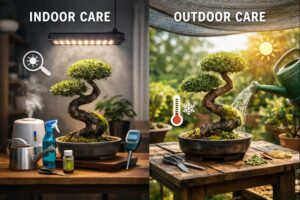
Indoor Care
When growing an S-shaped bonsai tree indoors, light is one of the most critical factors affecting both growth and overall shape.
- Light intensity and placement: Indoor light is generally weaker than outdoor sunlight, so the bonsai should be placed near a bright window, preferably facing south or east. Providing around 4–6 hours of bright, indirect light each day helps maintain healthy leaves, compact growth, and a well-defined S-shaped trunk line.
- Effects of insufficient light and adjustments: Lack of light can cause elongated branches, pale leaves, and a loss of visual balance, weakening the S-shaped design. In low-light conditions, grow lights may be used as a supplement, though natural light should remain the primary source whenever possible.
Outdoor Care
Outdoor environments more closely match the natural growing conditions of an S-shaped bonsai tree.
- Natural sunlight advantages: Adequate sunlight promotes strong photosynthesis, resulting in denser foliage and clearer trunk movement. This supports both healthy growth and improved visual structure.
- Protection during intense sunlight: During hot summer periods, partial shade may be necessary to prevent leaf scorch, while maintaining good airflow around the tree.
2. Watering and Humidity Management
Indoor Care
Proper watering and humidity control are essential when caring for an S-shaped bonsai tree indoors.
- Watering frequency and judgment: Watering should be based on soil moisture rather than a fixed schedule. Once the top layer of soil becomes slightly dry, water thoroughly to avoid root suffocation caused by overwatering.
- Adjusting indoor humidity: Indoor air is often dry, especially with heating or air conditioning. Light misting or the use of a humidifier can help prevent dry leaf tips and support steady growth.
Outdoor Care
Outdoor bonsai experience faster moisture loss due to wind and sunlight.
- Watering during the growing season: In spring and summer, watering frequency should be increased to keep the soil consistently moist without becoming waterlogged.
- Rainfall and drainage considerations: Rain can naturally hydrate the bonsai, but proper drainage is essential to prevent standing water and root rot.
3. Temperature and Seasonal Changes
Indoor Care
Indoor temperatures tend to remain stable, which affects the growth rhythm of an S-shaped bonsai tree.
- Impact of stable temperatures: Consistent warmth may prevent certain species from entering dormancy, so watering and fertilization should be reduced to slow growth when necessary.
- Avoiding temperature stress: The bonsai should be kept away from heating vents, air conditioners, and areas with sudden temperature fluctuations.
Outdoor Care
Outdoor care allows the S-shaped bonsai tree to follow natural seasonal cycles.
- Natural growth rhythm: Active growth occurs in spring and summer, slows in autumn, and enters dormancy in winter, supporting long-term health.
- Winter protection: Depending on species and climate, winter protection such as wind shelter or temporary indoor placement may be required.
4. Pruning and Shape Maintenance
Indoor Care
Growth is typically slower indoors, making pruning more focused on maintaining form.
- Pruning focus: Remove elongated or misaligned branches that disrupt the S-shaped trunk line to preserve visual balance.
- Post-pruning care: Good airflow and cleanliness help reduce the risk of pests and disease after pruning.
Outdoor Care
Outdoor conditions encourage faster growth and stronger branch development.
- Pruning frequency: Regular pruning and pinching during the growing season help control shape and direct energy to key structural branches.
- Recovery advantages: Better airflow and sunlight support quicker recovery and stronger structural development.
5. Fertilization Needs
Indoor Care
Indoor S-shaped bonsai tree growth is usually slower and requires lighter feeding.
- Fertilization principles: Because indoor bonsai absorb nutrients at a slower rate, fertilizer should be applied in small amounts and at a lower frequency. Overfertilization can easily lead to salt buildup in the soil, which may damage fine roots and negatively affect leaf health and overall growth stability.
- Fertilizer selection: Diluted liquid fertilizers are generally preferred for indoor use, as they allow for better dosage control and more even nutrient distribution. Applying fertilizer during active growth periods and reducing feeding when growth slows helps maintain steady development without stressing the tree.
Outdoor Care
Outdoor bonsai generally have higher nutritional demands.
- Feeding during the growing season: During spring and summer, regular fertilization supports strong leaf development, healthy branch structure, and gradual thickening of the trunk, all of which contribute to maintaining a well-defined S-shaped form.
- Adjustments during dormancy: As temperatures drop and growth slows in autumn and winter, fertilization should be reduced or stopped entirely. This allows the bonsai to follow its natural growth cycle, conserve energy, and prepare for healthy regrowth in the following season.
Conclusion
Caring for an S-shaped bonsai tree requires a clear understanding of how indoor and outdoor environments influence its growth, health, and overall appearance. Indoor care focuses more on precise control of light exposure, watering frequency, humidity, and fertilization, as limited space and stable temperatures can slow growth and affect natural rhythms. Careful observation and timely adjustments are essential to maintain balance and prevent stress.
Outdoor care, on the other hand, allows the S-shaped bonsai tree to benefit from natural sunlight, airflow, and seasonal changes. These conditions encourage stronger growth, clearer trunk movement, and healthier long-term development, though they also require more frequent pruning, watering, and seasonal protection. By selecting the appropriate environment and adapting care practices accordingly, growers can preserve the elegant S-shaped form while ensuring steady growth and lasting vitality.
0