
Watering is one of the most important factors affecting the health and growth of any bonsai, and Loropetalum chinense bonsai is no exception. Many growers struggle to determine the right watering frequency, which often leads to issues such as root rot or dehydration. In reality, there is no fixed universal schedule because the watering needs of Loropetalum chinense bonsai depend on climate, soil type, pot size, and seasonal changes. Understanding how and when to water properly is essential for achieving the best growth results and maintaining a healthy Loropetalum chinense bonsai throughout the year.
General Watering Frequency Guidelines
The basic watering frequency of Loropetalum chinense bonsai varies depending on environmental conditions, but some general rules can help beginners establish a stable routine.
- Check soil moisture daily:
Instead of watering on a fixed schedule, it is better to check the soil every day. If the top layer feels slightly dry, it is usually the right time to water Loropetalum chinense bonsai. - Typical frequency in normal seasons:
In spring and autumn, watering every 2–3 days is often sufficient, depending on humidity levels and pot size. - Adjust based on pot drainage:
For Loropetalum bonsai, smaller pots experience faster water evaporation and therefore require more frequent watering, whereas larger pots are able to retain moisture for a longer period. - Avoid rigid scheduling:
Fixed “daily or weekly” rules are ineffective. Observation is more important than strict timing for healthy growth.
By following these flexible guidelines, growers can better understand the natural rhythm of Loropetalum chinense bonsai.
Seasonal Watering Adjustments
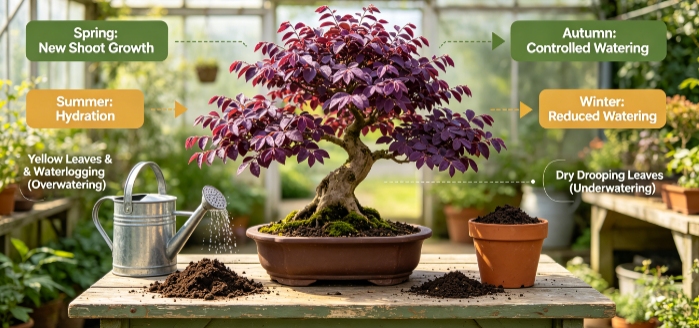
Seasonal changes significantly influence how often Loropetalum chinense bonsai should be watered. Adjusting watering habits throughout the year is essential for the best growth.
- Spring growth period:
During active growth, Loropetalum chinense bonsai requires more water to support new leaves and branches. Typically, watering every 1–2 days may be needed in warmer climates. - Summer heat conditions:
High temperatures increase evaporation, so daily watering may be necessary. However, avoid overwatering during humid summer days to prevent root issues. - Autumn transition phase:
As growth slows, watering frequency should gradually decrease. It needs less moisture but still requires consistent soil hydration. - Winter dormancy care:
In colder seasons, water consumption drops significantly. Watering once every 5–7 days is usually enough, depending on indoor or outdoor placement.
Adapting to seasonal changes ensures stable development of Loropetalum chinense bonsai year-round.
Soil, Pot, and Drainage Factors
The physical environment of the plant plays a major role in determining how often Loropetalum chinense bonsai needs water. Soil and pot structure are especially important.
- Well-draining soil mix:
A mix of organic material, sand, and mineral components allows excess water to escape quickly, preventing root rot in Loropetalum chinense bonsai. - Pot size influence:
Small bonsai pots dry faster due to limited soil volume, requiring more frequent watering than larger containers. - Drainage hole importance:
Proper drainage holes ensure that excess water does not accumulate, which is essential for a healthy Loropetalum chinense bonsai - Soil composition balance:
Soil with excessive water retention may lead to overwatering issues, while soil with a high sand content may dry out too quickly.
Understanding these factors helps growers adjust watering frequency more accurately for Loropetalum chinense bonsai.
Signs of Overwatering and Underwatering
Instead of relying only on schedules, learning to read plant signals is key to maintaining healthy Loropetalum chinense bonsai.
- Overwatering symptoms:
Yellowing leaves, soft stems, and a musty smell in the soil often indicate excessive moisture. Roots may begin to rot if Loropetalum chinense bonsai is overwatered repeatedly. - Underwatering signs:
Dry, crispy leaves and drooping branches are common indicators that the plant needs more water. - Leaf texture changes:
Healthy leaves are firm and vibrant, while stressed leaves often lose color or elasticity. - Soil condition clues:
Constantly wet soil suggests poor drainage, while overly dry soil pulling away from the pot edges indicates underwatering.
By observing these signs, growers can fine-tune watering habits for optimal Loropetalum chinense bonsai growth.
Best Watering Techniques for Healthy Growth
Proper watering technique is just as important as frequency when caring for Loropetalum chinense bonsai. Correct methods improve absorption and root health.
- Deep watering method:
Water thoroughly until it drains from the bottom. This ensures all roots of Loropetalum chinense bonsai receive moisture evenly. - Avoid surface watering only:
Light watering that only wets the top layer can lead to weak root development over time. - Morning watering preference:
Watering in the morning allows excess moisture to evaporate during the day, reducing fungal risks. - Use of clean water:
Rainwater or filtered water is preferred to avoid chemical buildup that may affect Loropetalum chinense bonsai
Applying these techniques consistently leads to stronger and more resilient plant growth.
Conclusion
In conclusion, there is no fixed rule for how often Loropetalum chinense bonsai should be watered, but understanding environmental conditions, soil type, and seasonal changes is essential for best growth. On average, watering every 1–3 days in warm seasons and less frequently in colder months works well, but observation remains the most important factor. By learning to read plant signals and applying proper watering techniques, growers can maintain a healthy and thriving Loropetalum chinense bonsai. With consistent care and attention, Loropetalum chinense bonsai will reward you with vibrant foliage and long-term beauty.
0