
A double-glass photovoltaic module is a type of solar panel designed with glass layers on both the front and back sides, replacing the traditional backsheet used in conventional modules. This structure enhances durability, environmental resistance, and long-term performance. As solar projects increasingly demand higher reliability and longer service life, the double-glass photovoltaic module has become a preferred solution for utility-scale, commercial, and harsh-environment applications.
Unlike standard glass-backsheet panels, a double-glass photovoltaic module encapsulates solar cells between two layers of tempered glass, offering improved protection against moisture, mechanical stress, and aging factors.
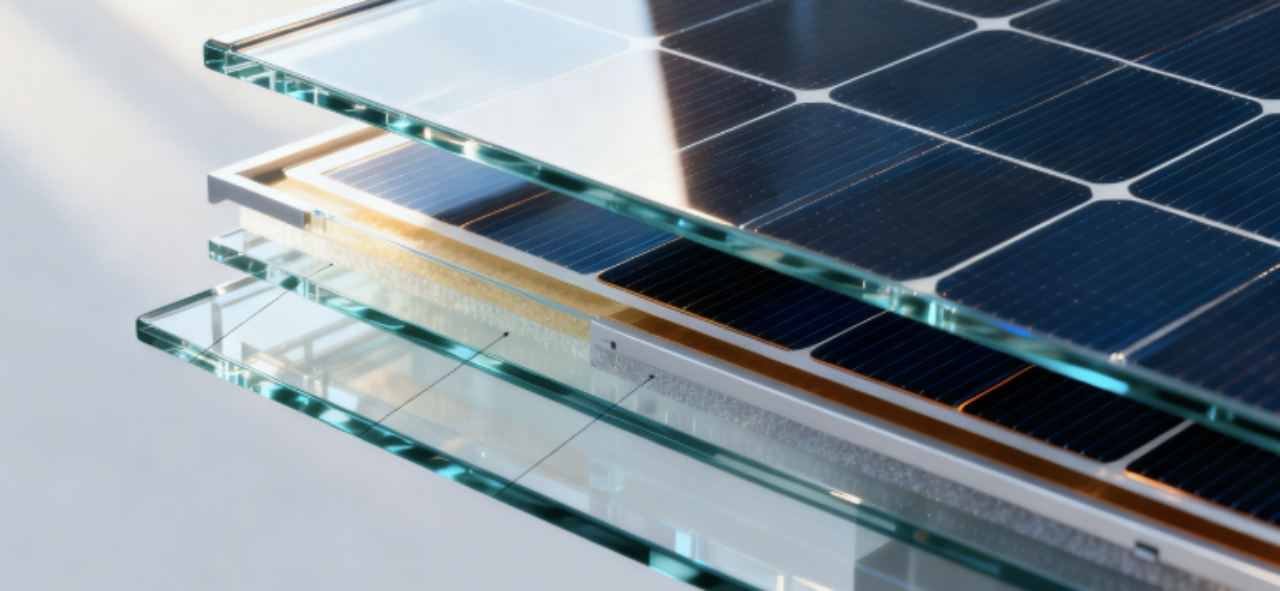
Structure and Materials of the double-glass photovoltaic module
- Glass-to-Glass Encapsulation Design
The core feature of a double-glass photovoltaic module is its symmetrical glass-to-glass structure. Both sides use tempered solar glass, which provides strong mechanical support and excellent weather resistance.
- Encapsulation and Cell Compatibility
In a double-glass photovoltaic module, encapsulation materials such as POE or EVA are used to bond the solar cells securely between the glass layers. This structure is compatible with modern cell technologies, including PERC, TOPCon, and heterojunction cells.
Performance Advantages of the double-glass photovoltaic module
- Enhanced Durability and Protection
A major advantage of the double-glass photovoltaic module is its superior resistance to humidity, sand, salt mist, and UV exposure. The glass back layer prevents moisture ingress, significantly reducing degradation risks.
- Improved Long-Term Power Output
Due to reduced aging and better encapsulation, a double-glass photovoltaic module often delivers more stable power output over its lifespan, especially in environments with high temperature or humidity variations.
Application Scenarios for the double-glass photovoltaic module
- Utility-Scale and Large Solar Plants
In large solar farms, the double-glass photovoltaic module is favored for its long service life and lower maintenance requirements, which help reduce the overall levelized cost of electricity.
- Bifacial and Harsh Environment Projects
Many bifacial systems adopt a double-glass photovoltaic module design to allow light absorption from both sides. It is also widely used in deserts, coastal regions, and agricultural PV projects where durability is critical.
Manufacturing and Cost Considerations of the double-glass photovoltaic module
- Production Process Characteristics
Manufacturing a double-glass photovoltaic module requires precise lamination control and high-quality glass handling, which can increase technical complexity compared to traditional modules.
- Cost vs. Lifecycle Value
Although the initial cost of a double-glass photovoltaic module may be higher, its longer lifespan, lower degradation rate, and reduced maintenance often result in better long-term economic value.
Comparison with Traditional Modules Using the double-glass photovoltaic module
- Structural and Reliability Differences
Compared to glass-backsheet designs, a double-glass photovoltaic module offers improved fire resistance, lower PID risk, and stronger mechanical stability.
- Selection Considerations
When choosing between module types, project conditions, expected lifespan, and environmental factors should be evaluated to determine whether a double-glass photovoltaic module is the optimal solution.
Conclusion
In summary, a double-glass photovoltaic module represents an advanced solar module design focused on durability, performance stability, and long-term reliability. With its glass-to-glass structure, strong environmental resistance, and compatibility with modern cell technologies, it plays an increasingly important role in today’s photovoltaic market. For projects that prioritize long-term performance and reduced risk, the double-glass photovoltaic module is a practical and forward-looking choice.
0