
With the growing popularity of electric vehicles, the demand for ev charger wall mount in homes and commercial spaces is increasing rapidly. Although wall-mounted chargers may seem simple to install, many users and installers still make common mistakes that can affect the charger’s performance, safety, and longevity. This article explores these mistakes and provides professional guidance to help ensure a proper installation of your ev charger wall mount.
1. Ignoring Wall Load-Bearing Capacity
- Choosing the Wrong Wall
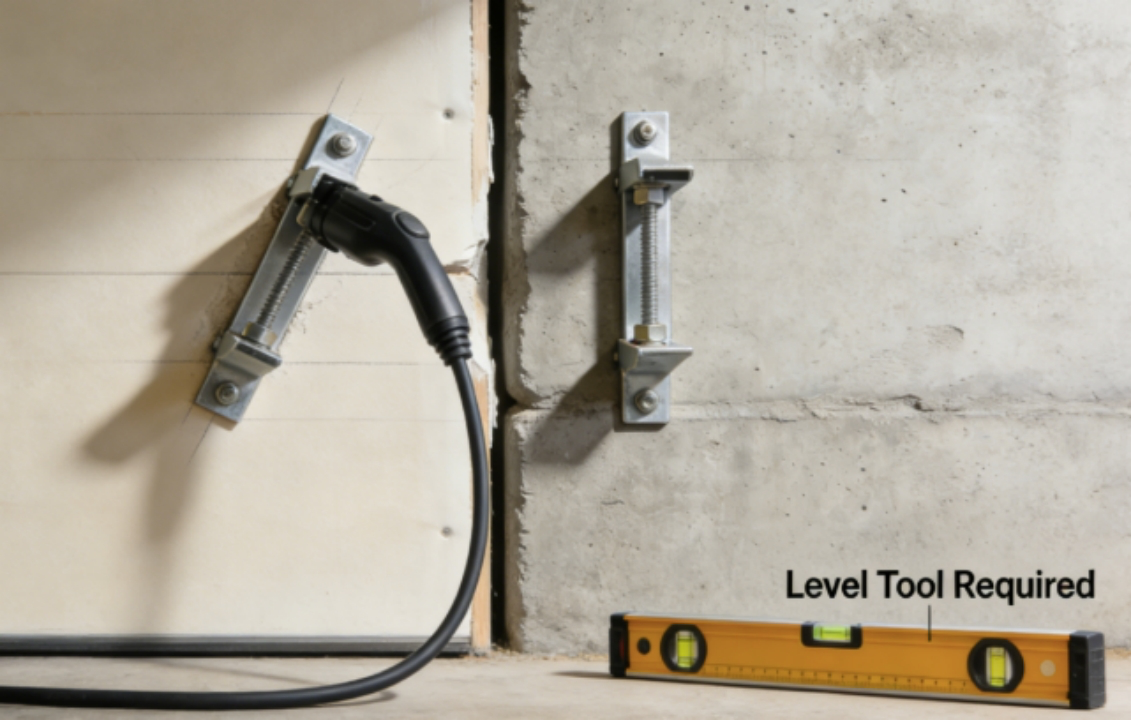
One of the most common mistakes is neglecting the type and strength of the wall. Concrete walls generally provide sufficient support, but drywall or hollow brick walls may not hold the weight of the charger and its cable without additional reinforcement. Improper installation can result in the mount loosening or even falling, posing safety hazards.
- Using Inappropriate Fasteners
Even if the wall is suitable, using the wrong screws or anchors can compromise stability. It is recommended to choose high-strength bolts according to the weight of the ev charger wall mount and ensure that each fastener is firmly secured.
2. Overlooking Electrical Safety Standards
- Incorrect Cable Routing
Some installers route the power cable carelessly for convenience, ignoring cable length and path regulations. This increases wear risks and may cause short circuits or electric shocks. Proper installation requires following the manufacturer’s guidelines, arranging the cable to avoid sharp bends, heat sources, or friction.
- Improper Grounding
Grounding is crucial for safe operation of an ev charger wall mount. Poor grounding can render the charger’s leakage protection ineffective, creating potential hazards. Make sure the ground wire is connected to a compliant grounding point and perform a grounding test after installation.
3. Improper Mounting Location
- Incorrect Height
Mounting the charger too high or too low affects the ease of handling the charging plug and cable. It is generally recommended to install the ev charger wall mount at a height of approximately 120–150 cm from the ground, ensuring ergonomic convenience.
- Insufficient Clearance
A tight installation space can make plugging and unplugging the charger difficult and may damage the cable. Always leave adequate space around the mount for smooth operation and maintenance.
4. Neglecting Protective Measures
- Ignoring Waterproofing and Dust Protection
For outdoor installations, overlooking the charger’s ingress protection (IP) rating can allow water or dust to enter, reducing the device’s lifespan. Select an ev charger wall mount rated IP65 or higher, and consider additional rain covers if necessary.
- Lack of Vibration Support
In garages or areas subject to vibration, insufficient support can loosen screws over time. Installing vibration-damping pads or using anti-vibration bolts can improve stability and long-term durability.
5. Conclusion and Recommendations
Installing an ev charger wall mount involves more than simply fixing the device to a wall. Considerations include wall strength, electrical safety, optimal location, and protective measures. Avoiding these common mistakes ensures long-term stable operation and user safety. Professional guidance suggests: evaluate the wall and surrounding space in advance, choose proper mounts and fasteners, adhere to electrical codes, and implement protective measures. Following these steps will allow your ev charger wall mount to deliver optimal performance and secure EV charging.
0