
In modern power communication and broadband infrastructure, the ADSS fiber optic cable (All-Dielectric Self-Supporting cable) plays a critical role in enabling high-speed data transmission along overhead power lines without requiring metallic support or grounding. One of the most frequently asked questions by engineers and project planners is: What is the lifespan of ADSS fiber optic cable? Generally, its service life is designed to range from 20 to 30 years, depending on environmental conditions, installation quality, and maintenance practices. However, real-world performance can vary significantly based on factors such as UV exposure, mechanical stress, and weather conditions. Understanding its lifespan requires analyzing its structural design, environmental resistance, and long-term durability characteristics.
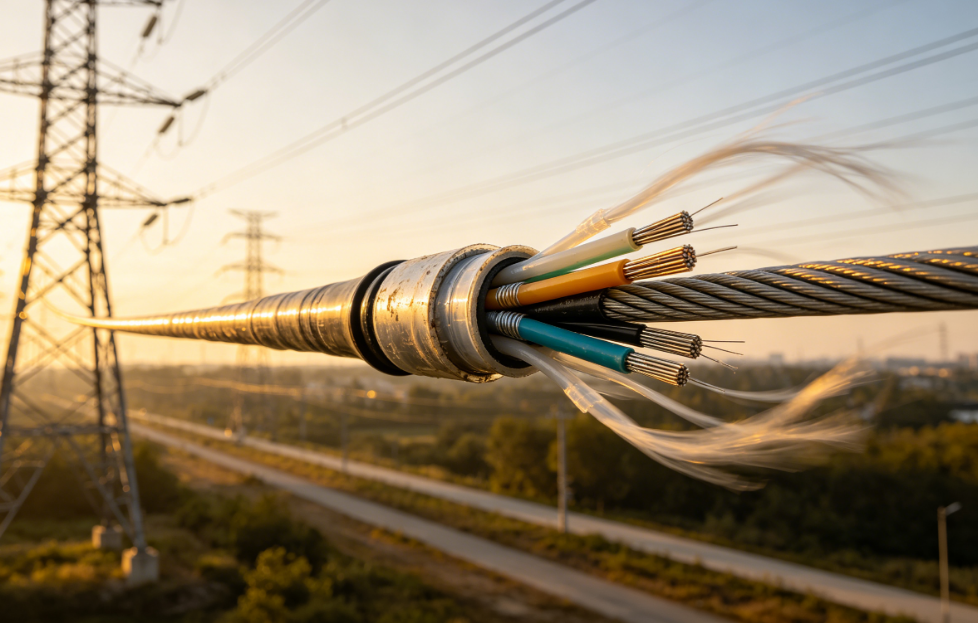
Structural Design That Influences Lifespan
The lifespan of ADSS fiber optic cable is strongly determined by its unique all-dielectric structure, which eliminates metal components and enhances long-term stability.
- All-dielectric material composition
Since the cable contains no metallic elements, it avoids corrosion and electrical interference, significantly extending its operational life in high-voltage environments. - Aramid yarn reinforcement system
High-strength aramid fibers provide tensile support, ensuring the cable can withstand mechanical stress from wind, ice, and long-span aerial installations without deformation. - Central loose tube protection
The optical fibers are housed in buffer tubes filled with water-blocking gel, protecting them from moisture intrusion and micro-bending damage. - Outer jacket engineering
The polyethylene (PE) or tracking-resistant outer sheath protects against UV radiation, chemical exposure, and environmental aging, which directly affects long-term durability.
Environmental Factors Affecting Service Life
Even though ADSS cable is designed for outdoor use, environmental conditions still play a major role in determining its lifespan.
- UV radiation exposure
Continuous sunlight exposure can gradually degrade the outer jacket, especially in regions with high solar intensity, reducing overall lifespan if low-quality materials are used. - Temperature fluctuations
Extreme hot and cold cycles can cause material expansion and contraction, which may lead to long-term fatigue in the cable structure. - Wind and ice loading conditions
In areas with strong wind or heavy ice accumulation, the cable experiences constant mechanical stress, which can shorten its operational life if not properly designed for local conditions. - Air pollution and chemical exposure
Industrial zones with high levels of pollutants may accelerate the aging of the cable sheath, especially in acidic or corrosive environments.
Installation Quality and Mechanical Stress Impact
Proper installation is one of the most critical factors affecting the lifespan of an ADSS fiber optic cable.
- Incorrect tension control
Excessive tension during installation can stretch the cable beyond its safe limits, causing long-term fiber strain and potential signal degradation. - Improper sag management
If cable sag is not correctly calculated, wind-induced vibration can lead to micro-damage over time. - Pole spacing and route design
Long spans between poles increase mechanical load, reducing service life if not properly engineered for the installation environment. - Handling damage during deployment
Bending beyond the minimum radius or rough handling during installation can introduce internal stress that reduces durability.
Maintenance and Operational Conditions
Although ADSS fiber optic cable is designed for low maintenance, operational practices still influence its longevity.
- Regular visual inspection schedules
Periodic inspection helps detect early signs of jacket wear, sagging, or external damage before serious failure occurs. - Vegetation and environmental clearance
Ensuring that trees or external obstacles do not interfere with the cable reduces the risk of abrasion or accidental impact. - Monitoring of line tension stability
Over time, environmental forces may change cable tension, so periodic adjustments help maintain optimal performance. - Protection from third-party damage
Construction activities near overhead lines are a common risk factor and must be managed to avoid accidental cable cuts.
Expected Lifespan in Real-World Applications
Under ideal conditions, the ADSS fiber optic cable is designed for long-term use in various deployment scenarios.
- Standard expected lifespan range
Most manufacturers design ADSS cable for a service life of 20 to 30 years under normal operating conditions. - High-quality installations performance
When properly installed and maintained, premium-grade cables can exceed 30 years of service without significant performance degradation. - Harsh environment reduction factor
In extreme climates such as coastal, desert, or industrial regions, the lifespan may be reduced to around 15–20 years. - Influence of material grade and design
Higher-grade outer jackets and improved UV-resistant materials can significantly extend operational longevity.
Conclusion
The lifespan of an ADSS fiber optic cable typically ranges between 20 and 30 years, but this duration depends heavily on structural design, environmental conditions, installation quality, and maintenance practices. Its all-dielectric construction, aramid reinforcement, and protective outer sheath make it highly durable for overhead power line communication systems. However, factors such as UV exposure, mechanical stress, and improper installation can shorten its service life. By selecting high-quality materials and ensuring correct installation and maintenance, network operators can maximize the long-term performance and reliability of ADSS cable systems in modern communication infrastructure.
0