
Though many today associate them with pretty pastel decorations, plastic surprises, and chocolate treats, their history dates back thousands of years. Egg decorating and gift-giving connect seamlessly the ancient observance of seasons and the religion of Christianity in modern times with creativity.
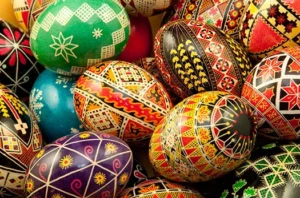
The History: From Spring Celebration to Sacred Meaning
Egg decoration existed long before Easter had become a holiday. For ancient cultures of Europe, the egg was a perfect symbol of the renewal of life and the universe. At the time of the spring equinox, the celebration of warm weather and long days, when nature wakes up, occurred. Eggs looked so inert and cold at that point, yet the process of amazing change happened inside them. The emergence of life through breaking the shell made them a perfect focus for celebrating the spring.
The spread of Christianity in Europe was accompanied by the adoption of this symbolic image and making it a little more spiritual. The eggshell that symbolized spring became a symbol of the closed-off tomb of Jesus Christ. Just like the chick breaks the eggshell in order to come out into the world, Jesus Christ was able to break the very barrier of death in order to bring spiritual rebirth and hope for everyone. In order to celebrate the resurrection and sacrifice of Christ’s blood, the first believers dyed their eggs red.
There is also another tradition related to the Easter meal and eggs. During the whole forty days of Lent, which is a period of prayer and fasting before Easter, people were not allowed to eat any meat products, including dairy. Yet, at the same time, hens did not stop laying eggs on a daily basis. In order not to throw away the food, it was decided to make the food special by boiling and decorating eggs. Thus, on Easter Day, which was the end of the fasting period, eggs became something really special.
Easter Egg Traditions in the World: Differences Among Various Countries
Over time, various countries adapted the custom of Easter eggs according to their own unique culture.
- Ukraine & Eastern Europe (Pysanky Wax-Resist Painting): Local artists apply beeswax and special dyes to create beautiful patterns on real eggs. Every color and every symbol used in such a painting is very important, as it expresses wishes for good health, family prosperity, and abundant harvest.
- United Kingdom & United States (Egg Rolling Races): Kids meet on green hills and roll hard-boiled eggs down the slopes. Such an entertaining activity actually represents the rolling away of the stone that blocked the way from Christ’s grave.
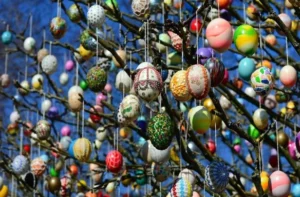
- Germany & Austria (Ostereierbaum / Easter Egg Trees): People make beautiful decorations for trees; namely, they hollow the raw eggshells, paint them by hand, and then decorate them with ribbons. After that, people hang the eggs on tree branches outside or inside their houses as a decoration.
- Greece & Eastern Orthodox Communities (Kokkina Avga / Red Egg Tapping): People dye eggs a deep red color in order to represent the blood of Christ. During Easter meals, people play the game of Tsougrisma; that is, they tap their eggs against each other. Whoever has the last intact egg gets lucky in the coming year.
Aside from such practices, community celebrations emphasize their heritage even today. For example, the famous Easter Egg Roll that takes place on the White House lawn in Washington, D.C., each year brings together thousands of families and maintains the traditions of historic folk customs in a colorful and lively modern setting.
From Edible Eggs to Fine Art and Home Decorations
Over time, the eggs evolved into not only a means of making breakfast but also beautiful artwork and household decor items.
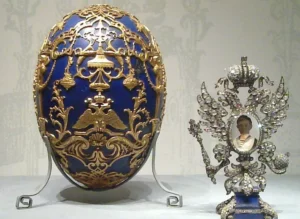
The most outstanding creations among these are the famous Fabergé Eggs created in Imperial Russia at the turn of the 19th century. The Tsar Alexander III commissioned jeweler Peter Carl Fabergé to design Easter gifts for the Empress of Russia. The eggs were covered with gold, platinum, diamonds, and other precious gems; opening the egg would reveal some fantastic mechanism hidden inside the egg – from a little carriage made of gold to a little clockwork bird.
Today, Easter eggs are an important element of holiday house decoration. Instead of decorating their homes with the fragile real eggs, people often use homemade wooden eggs, luxurious porcelain dishes, and festive spring wreaths consisting of artificial eggs and flowers. Placing these joyful items in the house or on the entrance console will allow you to bring the spring spirit into your life directly.
Modern Development: Candies, Easter Egg Hunts and Popular Culture
In recent times, Easter eggs have been successfully developed into commercial goods, fun games, and popular culture.
First, the emergence of hollow chocolate eggs happened in the 19th century as European candy makers started manufacturing chocolate. The tradition of decorating Easter eggs was then replaced by this invention of making hollow chocolate eggs that became favorite candies for children. In addition, with the myth about the Easter Bunny – which gives delicious gifts to well-mannered kids – people eventually got a popular game called “Easter Egg Hunt”.
Amazingly enough, the name “Easter egg” has found its way into the modern computer era. An “Easter egg” in computer programming, video game creation, and moviemaking is a kind of joke, bonus feature, or reference that is secretly embedded there by programmers or moviemakers in order for fans to find it.
Since times immemorial, the Easter egg has evolved from simple spring symbols or religious signs to more sophisticated decorative items or even modern cultural references. The Easter egg remains an incredibly versatile custom.
0