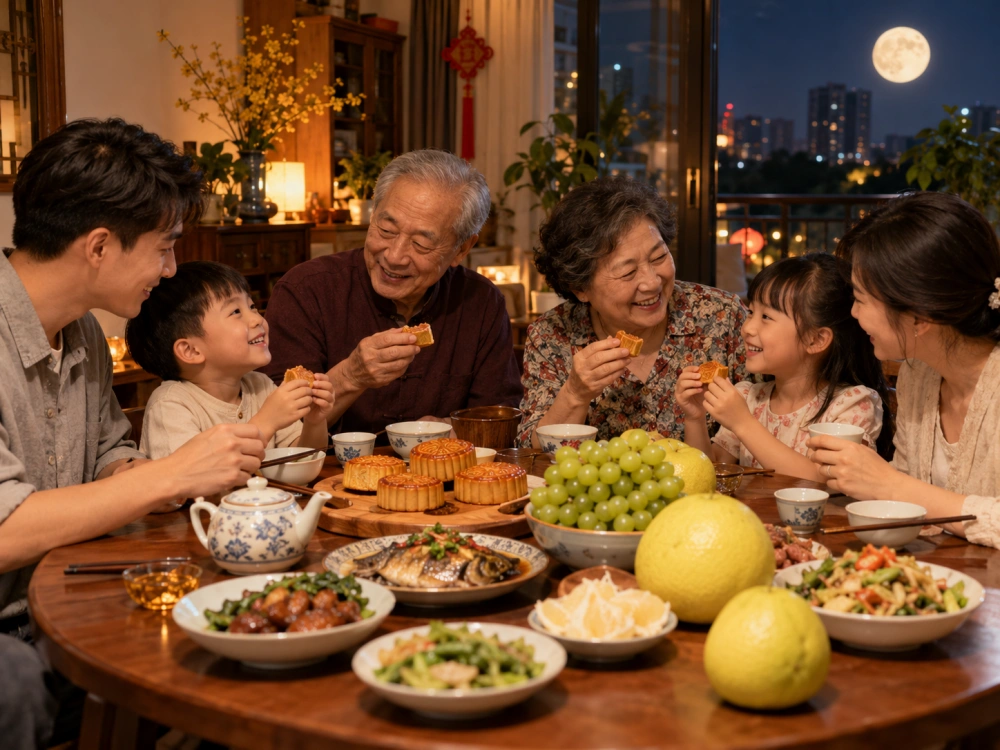
Traditionally, there comes the 15th day of the eighth month of the lunisolar calendar which marks the full moon. Mooncakes, lanterns, and family gatherings have become some of the most distinctive features of the Mid-Autumn Festival. In addition to being used as decor for this holiday or something to eat, these aspects have cultural symbolism in this festival.
Mid-Autumn Festivals happen according to the ancient calendar; thus, the Gregorian date varies but usually lies between September and early October. Although many changes have been made, family reunion, well-wishes, and reunion remain the main part of the occasion.
The relation to the culture starts with the idea of the moon as the symbol of the reunion, where the mooncakes are the symbols of the family reunion and sharing. Also, lanterns add a festive mood and depict the traditions of the Mid-Autumn Festival.
1. The Evolution of the Moon as the Emblem of the Mid-Autumn Festival
The symbolism associated with the moon is highly important when it comes to the celebrations that take place during the Mid-Autumn Festival. Moon gazing, eating round mooncakes, and reunions are all associated with it.
Why the Fifteenth Day of the Eighth Lunar Month?
A strong association is present between the lunar month and the moon phase in the Chinese lunar calendar. For example, the time elapsed between two successive new moons is 29.5 days.
In general, the 15th day of the lunar month falls on the full moon; therefore, the 15th day of the 8th lunar month becomes the perfect day to enjoy the moon. The festival of the Mid-Autumn Festival takes place on the 15th day of the 8th lunar month. The full moon is the symbol of harmony and unity of families in China; thus, the full moon becomes the symbol of the festival. The completeness and harmony can be depicted by a complete circle in the Chinese culture, and thus the full moon also becomes a symbol of that.
How the Moon Became Connected With Homesickness
Before the invention of modes of transport, living away from home could mean being separated from one’s family for months and even years at a time. However, people who lived in distant places were able to gaze at the same moon.
For this reason, the moon came to be associated closely with family members, native places, and nostalgia in Chinese literature. This is best exemplified in the poem titled Quiet Night Thought written by the Tang dynasty poet Li Bai, where the moon triggers the poet’s nostalgia for his native place. Mid-Autumn Festival moon gazing, thus, not only entails admiring the night skies but may also connote an emotional bond.
How the Chang’e Legend Became Part of the Festival
Chang’e is one of the most famous lunar deities in Chinese mythology. There have been myths regarding Chang’e, Hou Yi, the elixir of life, and the lunar palace for many years. It would be naive to say that the Mid-Autumn Festival was invented based on the myth of Chang’e only.
The Mid-Autumn Festival has been developed through the impact of myths associated with the moon, seasonal festivals, agriculture, literature, and family customs.
2. Reasons Why Mooncakes Came to Represent the Mid-Autumn Festival
If the moon is the festival’s most important natural symbol, the mooncake turns that symbolism into a shared experience.
Why Are Mooncakes Usually Round?
The traditional mooncakes are usually circular in shape and resemble the full moon, and this signifies unity and reunion in Chinese culture. The circular shape is attributed to the significance of the importance of unity. The mooncakes are supposed to be shared too. A big mooncake is usually cut into four, six, or eight pieces for several family members to enjoy the same mooncake. This makes the mooncake change from being a personal food to a shared family food.
Different regions have different mooncakes. There is no one universal type of mooncake. Different regional food practices have resulted in the creation of many different types of mooncakes.
| Mooncake Style | Typical Filling | Regional Connection |
| Cantonese | Lotus seed paste / Salted egg yolk | Guangdong / Hong Kong |
| Suzhou-style | Sweet or savory fillings | Jiangsu region |
| Beijing-style | Nuts / Sweet fillings | Northern China |
| Snow Skin | Custard / Fruit / Chocolate | Modern markets |
The golden salted egg yolk of Cantonese mooncake is also symbolic of the moon. This illustrates how a traditional festival snack can be modified depending on local flavors without losing cultural significance.
From Festival Food to Seasonal Gift
Mooncakes are not only eaten in private but also gifted to each other as gifts for the season, among family, friends, co-workers, and business contacts. As a festival food item, mooncakes connect people in a gesture of sharing and symbolize reunion, gratitude, and good wishes during the Mid-Autumn Festival.
The packaging process has become essential, leading to mooncake boxes being part of Mid-Autumn gift culture.
Where Do Lanterns Fit Into the Tradition?
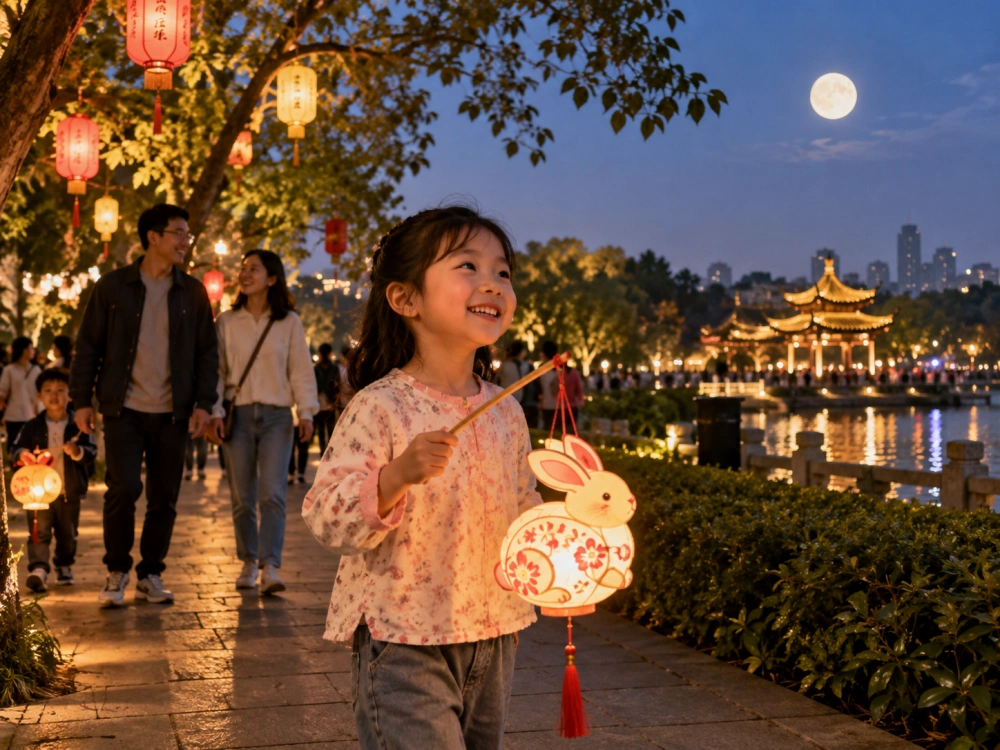
The use of lanterns is another symbolic representation of the Mid-Autumn Festival. Traditional lanterns consisted of paper material, bamboo framework, and candles. Today’s lanterns are made from fabric, plastic, and LED bulbs. Some shapes of lanterns could be circular-shaped lanterns while some can include animals or flowers.
Also, some lantern riddles might be seen in some parts of Mid-Autumn festivities, although these are popular during the Lantern Festival.
3. How Mid-Autumn Festival Symbols Have Changed in Modern Life
Even though modern life has not deprived the Mid-Autumn Festival of its symbolic meanings, it has influenced the way people interpret these symbols.
Mooncakes Go On Evolving.
In addition to conventional mooncake fillings such as lotus seed, bean paste, nuts, and salted egg yolk, there are now on the market:
• Snow skin mooncakes
• Chocolate mooncakes
• Ice cream mooncakes
• Low sugar mooncakes
• Mini mooncakes
Despite the continuous evolution of mooncakes’ recipes and packaging, their symbolic meaning has remained the same.
Lanterns Have Moved From Candles to LEDs
The technology involved in lanterns has changed considerably; there have been developments from paper lanterns that used candlelight and bamboo frames to lanterns made of tough materials and using LED lights. This makes lanterns safe to use and easy to carry around, and yet maintains their festive look.
LED lights provide an added advantage of eliminating any risk from an open flame that candles pose.
Family Reunion Has Entered the Digital Age
The traditional meaning of reunion implied going back home, having supper, eating mooncakes, and moon viewing together. However, today the relatives could be living in different cities and even in different countries. This is the reason why innovations like video chatting, instant messaging, and international courier services have appeared.
Thus, relatives who are located thousands of kilometers from each other will still be able to send moon cakes and view the moon together on that day.
Similar Festivals Have Developed Differently Across Asia
Other autumn festivals are observed in Asia too. The Vietnamese celebration of the Tết Trung Thu festival, which occurs around the same lunar date, always revolves heavily around children, lanterns, and lion dancing.
Similarly, there is the Korean holiday of Chuseok, which is also associated with families and the harvest season, and has special dishes like songpyeon. But Chuseok has its own history and traditions and should not be confused with a Korean variant of the Chinese Mid-Autumn Festival.
Conclusion
While the symbols of the Mid-Autumn Festival continue to change, their essential meanings have remained the same. The full moon symbolizes completion and reunion; mooncakes make this into a shared meal; and lanterns add light to family and community celebrations.
LED lights could replace candles, mooncakes could come in different flavors, and family gatherings could even move online; however, the basic concept of the festival has stayed the same – that distant people could be united through family and tradition.