
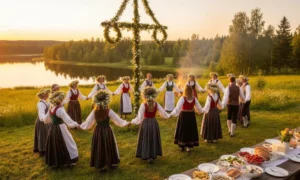
Each year at the end of June, Sweden hosts one of the most cherished traditional festivals called Midsummer. The festival is associated with the summer solstice and focuses on the welcoming of summer, natural beauty, and the unity of people and nature. Typically, families and friends move from urban areas to cottages or lakeshore and field areas to eat, sing, dance, and have fun.
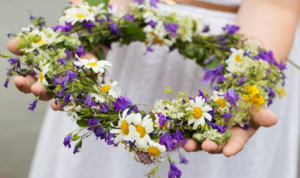
One of the most iconic symbols of all the Midsummer traditions is the flower crown called Midsommarkrans in Swedish. Made out of flowers, leaves, and other natural plants, these crowns are worn by women, children, and even men during the festivities. While looking like just any other accessory for the season, Swedish Midsummer crowns have a rich culture behind them, which is connected with nature, life, love, and happiness.
The Origins and Cultural Background of Swedish Midsummer Traditions
The origins of Midsummer festivities in Sweden can date back several centuries. Before the emergence of current celebrations, midsummer was highly associated with agriculture and natural processes. For the people who had to depend on their farms, the summer was a season of development and longer days, and it symbolized the hope of a fruitful harvest.
Eventually, Midsummer celebrations gained association with the Christian holidays connected with Saint John’s Day, but some of the traditions stayed ancient. In contrast to religious celebrations, which are mainly devoted to worship, the Midsummer holiday became an occasion for celebrating nature and community.
Wearing flower crowns became essential in such celebrations, as the plants possessed certain meanings in midsummer. In Scandinavian mythology, the night of Midsummer was a magical one, and the flowers gathered during this time could guarantee good fortune, happiness, and even future marriage.
Why Do Swedish People Wear Midsummer Flower Crowns?
The idea behind the flower crowns of Swedish Midsummer is connected with the relationship between a person and nature. Sweden has quite long winters when there is not much sun. Therefore, the beginning of summer becomes quite significant emotionally. Flowers and greenery used for the celebration symbolize warmth, power, and rebirth.
The creation of the flower crown itself is also a very important thing. Friends and family members usually gather to collect flowers and make flower crowns by hand. This activity brings people together and helps to transfer traditional skills to new generations.
| Flower Crown Feature | Symbolic Meaning |
| Fresh flowers | The beauty and short-lived nature of summer |
| Handmade weaving | Family connection and cultural inheritance |
| Natural materials | Respect for the environment |
| Bright colors | Celebration and seasonal joy |
Midsummer crowns are not limited to traditional celebrations nowadays, but can be seen in weddings, summer festivals, photo shoots, and even Scandinavian-style decorating of homes. Crowns in today’s world might be made out of dried flowers, artificial flowers, or different colors, depending on individual preferences.
Traditional Products and Decorations Related to Swedish Midsummer
Despite the fact that flower garlands have become the best-known symbols of Midsummer Day, there are numerous cultural artifacts and ornaments associated with this holiday. They are all related to Swedish design principles that imply simplicity, naturalness, and eco-friendliness.
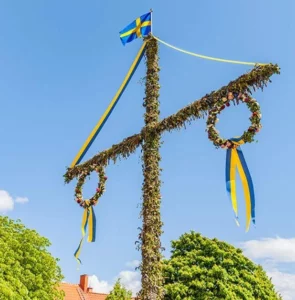
A key symbol of Midsummer is a special decorated pole called the Midsummer pole (Midsommarstång). Generally decorated with flowers, leaves, and ribbons, it serves as the focal point for community celebrations. Dancing around this pole to songs is what people do to entertain themselves.
| Cultural Product | Main Features | Common Uses |
| Midsummer flower crowns | Fresh flowers, dried flowers, or artificial flowers | Festival wear, photography, gifts |
| Midsummer pole decorations | Wooden structures with plants and ribbons | Outdoor celebrations |
| Floral table decorations | Wildflowers, flower arrangements, natural elements | Family dinners and parties |
| Nordic handmade textiles | Traditional patterns and natural colors | Home decoration and souvenirs |
Table decorations during Midsummer are also very significant for this holiday. Scandinavian families usually arrange the table with simple yet stylish accessories using white colors, wooden cutlery, candles, and seasonal flowers. Such decorations show the Scandinavian lifestyle in which natural beauty and good design play an important role.
Those who love to work with crafts related to culture would find many useful items in Midsummer designs. A flower crown, floral wreath, or some other Scandinavian decoration would not only refer to the festival but also symbolize the values of Swedish culture.
How Swedish Midsummer Crowns Continue in Modern Culture
Despite all the transformations that took place in the Swedish community, the tradition of wearing flower crowns during Midsummer is still popular among many people in the country. For most Swedes, Midsummer is one of those times when people can really immerse themselves in traditions and enjoy spending their time with families and friends outside.
Flower crowns are also reinterpreted by modern designers. For example, some of them create everlasting floral crowns from artificial flowers, and others blend classical wildflowers in unique color combinations.
The flower crowns of today are applicable for various occasions, from wedding ceremonies to interior decoration of houses. The interest of people all over the world in the Scandinavian lifestyle is another reason why flower crowns from Sweden became known throughout the world. Still, the main value of the Midsummer crown is beyond its design. It symbolizes a certain cultural mentality.
Conclusion
The Swedish Midsummer flower crown may appear as just another flower-based decoration, yet it is filled with centuries of tradition. Since times immemorial, this object has been used as an expression of nature, joy, love, and community both in seasonal rites and in summer celebrations.
Used in a traditional setting during Swedish Midsummer Day celebrations or simply as a decoration of one’s home as part of Swedish culture, this handmade object helps one feel the warmth of summer through traditional Swedish customs.
0