
While Easter is typically connected to chocolate eggs, the Easter Bunny, and the tradition of searching for Easter eggs, these customs are the most popular today, but the celebration has much more.
In the UK, people eat hot cross buns during Easter, while in Germany special egg branches decorate their homes, and the Greeks have their peculiar red eggs. There are certain Easter traditions which are of religious origin; some are seasonal, family, and historical.
Therefore, analyzing various traditions related to this holiday not only helps to understand how this holiday is celebrated, but also shows the influence that such factors as religion, history, cuisine, culture, and modern lifestyle have on this very holiday.
1. The Development of Easter Customs Beyond Chocolate Eggs
Current Easter traditions are not based solely on chocolate and colored eggs. They are a mix of religious traditions, seasonal symbolism, local traditions, and other recent traditions.
Easter Does Not Have a Fixed Date
Whereas Christmas occurs on December 25 every year, Easter is a movable holiday unlike Christmas.
The earliest and the latest possible date for Easter Sunday within Western Christianity is either March 22 or April 25, respectively. It is calculated using a formula related to the spring equinox and the moon cycle.
There are some other traditions within the Eastern Orthodox churches that make their Easter fall on a different day from the Western Easter.
Therefore, one can find that there is one religion, but its celebration dates vary.
Eggs Became a Symbol of New Life
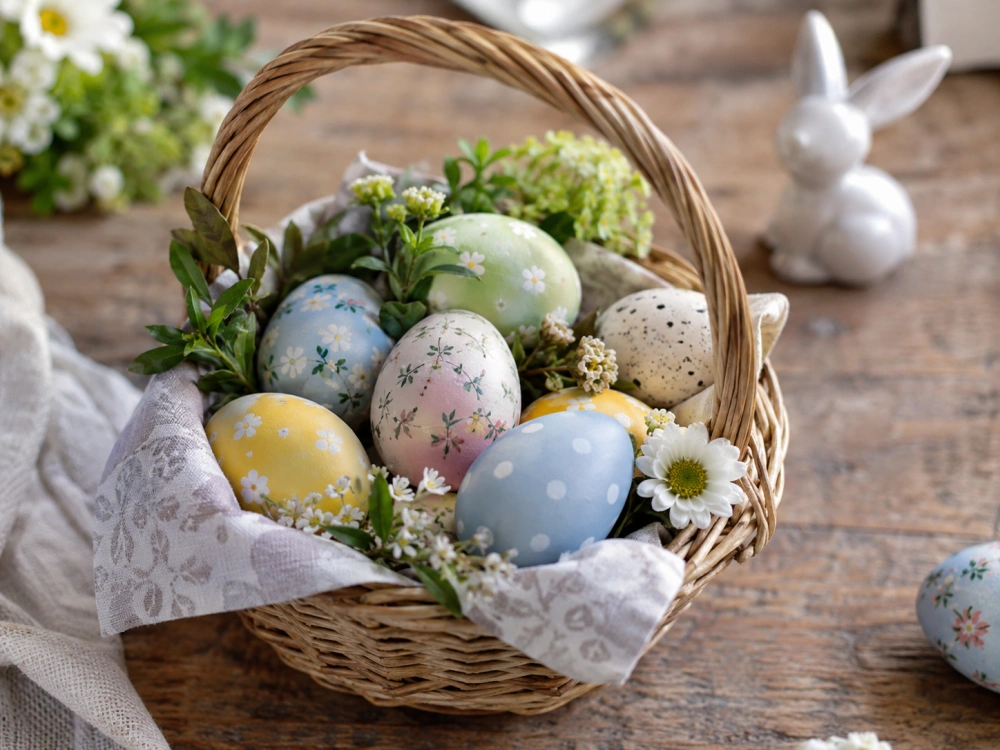
Eggs have always been associated with concepts like birth, rejuvenation, or rebirth and, therefore, are a natural choice for use in Easter celebrations.
Easter eggs used to be real eggs that could be painted, decorated, or colored.
With the development of chocolate production in Europe, chocolate Easter eggs emerged in the nineteenth century and gradually transformed from being mere confectionery products into one of the most recognizable items in the celebration of Easter.
It may be outlined as: Real Eggs → Decorated Eggs → Confectionery Eggs → Chocolate Easter Eggs
But chocolate is only one component of the overall Easter culture since various communities still retain unique foods, decorations, and traditions.
The Easter Bunny Also Evolved Over Time
Fertility and the season of spring have always been associated with rabbits and hares. As Europeans moved to America, the symbolism of the rabbit became more associated with Easter activities for children.
The Easter Bunny now evokes images of egg hunts, baskets, candies, and decorations.
This example illustrates how holiday symbols can change through time: Symbol of Tradition → Adaptation to Locality → Popular Culture → Holiday Product
2. Easter Traditions Across Different European Countries
Europe has several examples that show the diversity of Easter celebrations between neighboring nations. There are different customs related to food, decorations, religious rituals, and family time.
United Kingdom: Hot Cross Buns and Family Traditions
Hot cross buns are some of the most famous Easter foods of the United Kingdom.
The cross-shaped sweet buns are typically flavoured with spices and contain dried fruits. The food items have been strongly related to Good Friday for centuries.
Some of the elements that could be part of Easter celebrations in modern Britain include:
• Chocolate Easter eggs
• Easter egg huntl
• Family gatherings
• Spring decorations
In this way, Easter in Britain is a blend of religious rituals and family activities.
Germany: Easter Eggs in the Trees
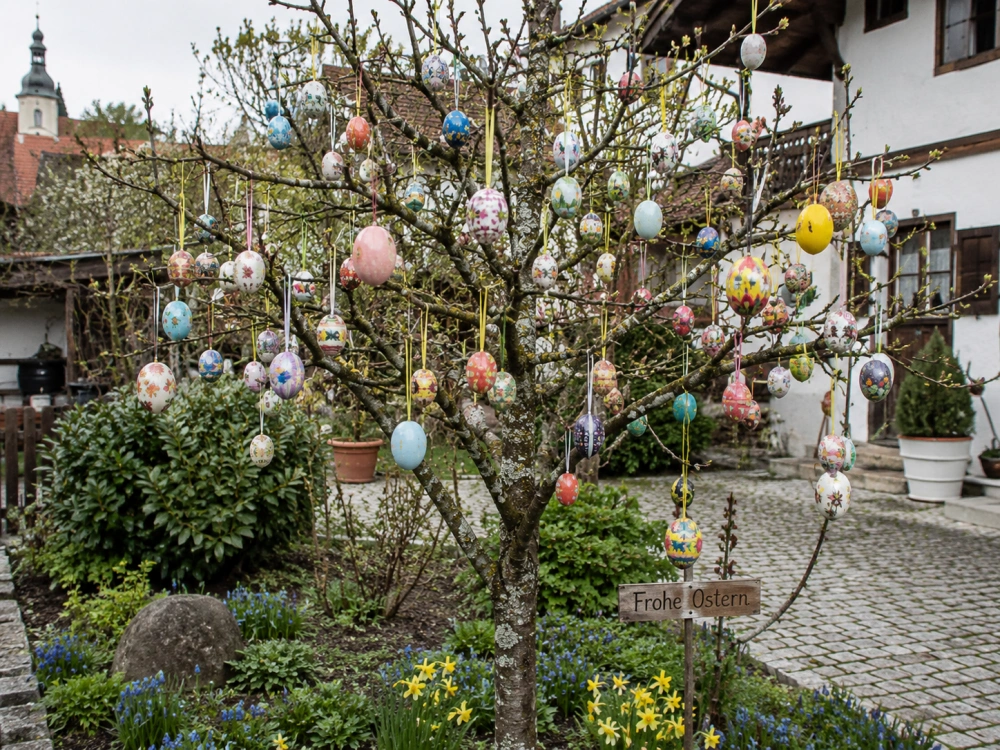
One distinctive German tradition is the Ostereierbaum, or Easter egg tree.
Decorated eggs may be hung from garden trees, shrubs, or branches displayed inside the home. Instead of keeping Easter eggs only in baskets, this tradition turns them into part of the surrounding seasonal decoration.
Colorful eggs displayed against spring branches also reinforce the connection between Easter, renewal, and changing seasons.
Greece: The Tradition of Red Easter Eggs
Greek Easter has a very distinctive visual element from many celebrations in Western Europe.
This tradition is the use of red-dyed eggs. This symbolizes a religious connotation and ties into family traditions during Easter time.
The other tradition involves tsoureki, which is sweet braided bread. Red eggs may be added to its appearance.
The differences become clearer when several traditions are compared:
| Country | Representative Tradition | Cultural Element |
| United Kingdom | Hot Cross Buns | Food / Religion |
| Germany | Ostereierbaum | Eggs / Decoration |
| Greece | Red Easter Eggs | Religion / Family |
| Various European Regions | Egg Decorating | Renewal / Tradition |
These examples show that there is no single version of a “European Easter.”
3. Easter Foods and Decorations Carry Different Cultural Meanings
The foods and decorations used at Easter have significance beyond adding color to the occasion. They can be significant historically, religiously, seasonally, or family-wise.
Easter Food Goes Beyond Chocolate
Even though chocolate eggs might have taken over the shelves of today’s supermarkets, there is a great deal of variation when it comes to Easter food traditions.
Apart from the British hot cross buns and the Greek tsoureki, there are various regional foods such as special breads, cakes, eggs, and meals made for the occasion.
The significance of these foods is usually quite straightforward: Food > Family Custom > Cultural Value
A traditional Easter food item does not necessarily have to be elaborate to hold its cultural value.
Easter Decorations Carry Symbolic Meanings
Easter decorations may include:
• Decorated eggs
• Easter baskets
• Bunnies
• Spring flowers
• Wreaths
• Branches for decoration
• Candles
Eggs symbolize new life, whereas flowers and young branches signify renewal.
In the Northern Hemisphere, Easter falls in the spring season, which makes pastel colors, flowers, rabbits, and eggs an intrinsic part of the festival.
But that doesn’t hold good everywhere. Australia is located in the Southern Hemisphere, where Easter falls in autumn.
Here’s a cultural lesson to remember: Easter tradition ≠ Spring tradition
Modern Easter Products Continue to Shape the Holiday
Today’s Easter festivities involve many items related to the season, including not only chocolates but also Easter cards, table decorations, Easter baskets, and bunnies.
The commercial aspects of Easter have not completely replaced the older traditions; rather, they coexist: Religious Tradition + Local Tradition + Family Traditions + Commercial Items
A family can go to church, bake bread, hide eggs for their children to look for, and give each other chocolate eggs.
Conclusion
While chocolate eggs and the Easter Bunny are perhaps the two most popular symbols associated with contemporary Easter, the holiday has so much more to offer.
While British Hot Cross Buns, German Easter Egg Trees, and Greek red eggs each represent unique local cuisine or decoration, all tell the tale of culture and religion.
Despite being celebrated worldwide, Easter still remains true to each culture’s heritage.
0