
The demand for EV power charging stations is driven by several practical factors rather than trends alone. Range anxiety remains a real concern for many users, with urbanization and fleet electrification increasing the demand for charging in shared spaces. Regulations and sustainability goals in many regions encourage a shift to electric mobility. However, without sufficient EV charging station coverage, these goals are difficult to achieve in practice.
Common Types of EV Power Charging Stations
Not all EV power charging stations serve the same purpose. They are usually categorized by charging speed and application.
- Slow charging stations, often installed in homes or workplaces, deliver lower power levels. They are suitable for overnight or long-duration parking, where vehicles can charge gradually without stressing the grid.
- Fast charging stations are designed for public locations such as highways and commercial centers. These EV power charging stations significantly reduce charging time, allowing drivers to regain usable range during short stops.
- Ultra-fast or high-power charging stations focus on minimizing downtime. They are typically placed along major travel routes and are engineered to handle high electrical loads safely.
Each type serves a different use case, but all contribute to a complete charging ecosystem.
Where EV Power Charging Stations Are Used Most Often
The placement of an EV power charging station strongly influences its effectiveness.
- Residential areas benefit from charging stations that support routine, predictable usage. Home garages and apartment parking structures are common locations, offering convenience and cost efficiency.
- Commercial environments rely on charging stations to support employee vehicles and attract customers. Shopping centers, hotels, and office buildings increasingly include EV power charging stations as standard amenities.
- Public infrastructure plays a critical role as well. Municipal charging hubs, street-side stations, and transit-oriented installations help ensure accessibility for drivers without private parking.Fleet operations such as delivery services and public transportation systems also depend on centralized EV power charging stations to maintain operational schedules.
How EV Power Charging Stations Communicate With Vehicles
Modern EV power charging stations are not passive power sources. Communication between the station and the vehicle ensures compatibility and safety.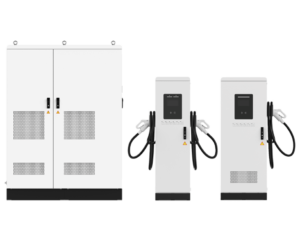
Before charging begins, the station verifies connection status and vehicle requirements. During charging, it monitors parameters such as temperature, current flow, and battery state.
Many EV power charging stations also support network connectivity. This allows remote monitoring, fault detection, usage tracking, and software updates. For users, this often translates into features like mobile app access and real-time charging information.
Communication protocols enable interoperability, ensuring that different vehicle models can use the same charging infrastructure.
Benefits Beyond Vehicle Charging
An EV power charging station provides value beyond simply charging vehicles.
It supports grid optimization by enabling smart charging strategies. Some stations can adjust charging rates based on grid demand or renewable energy availability.
Charging stations also contribute to data-driven planning. Usage patterns help cities and operators decide where to expand infrastructure. For businesses, installing EV power charging stations can enhance brand perception and attract environmentally conscious customers.
Conclusion
An EV power charging station is far more than a power outlet. It is a carefully designed system that supports the practical use of electric vehicles in everyday life. From homes to highways, these stations make electric mobility possible by addressing real-world challenges such as convenience, safety, and scalability.
0