
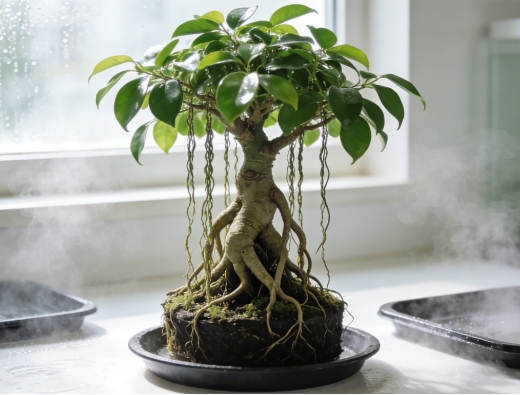
Aerial roots play a crucial role in the growth and aesthetic appeal of a Ficus bonsai. As a popular choice among bonsai enthusiasts, ficus species are known for their ability to develop striking aerial roots that enhance the tree’s natural and artistic appearance. However, the development and health of these roots are highly dependent on environmental conditions, particularly lighting and humidity. Understanding how these two factors influence aerial roots ficus bonsai is essential for maintaining vigorous growth, strong root structures, and an attractive bonsai shape.
The Role of Light in Aerial Root Development
Light is one of the most critical factors influencing the growth of aerial roots in Ficus bonsai. Proper lighting conditions determine not only overall plant health but also the formation and direction of aerial roots.
- Sufficient Light Promotes Root Growth: Aerial roots develop more actively when the bonsai receives bright, indirect sunlight. Adequate light encourages photosynthesis, providing the energy needed for root formation. Without enough light, the tree may produce fewer aerial roots or exhibit weak, thin growth.
- Light Intensity Affects Root Direction: Aerial roots tend to grow toward areas with higher humidity and favorable light conditions. When light is uneven, roots may grow irregularly, affecting the visual balance of the bonsai.
- Avoiding Direct Harsh Sunlight: While ficus trees tolerate light well, intense direct sunlight for extended periods can dry out aerial roots, making them brittle and less likely to thrive. A balance between brightness and protection is key.
- Seasonal Light Changes: During different seasons, light availability changes. Adjusting the placement of your aerial roots ficus bonsai ensures consistent light exposure, which supports continuous root development throughout the year.
Humidity and Its Impact on Aerial Roots
Humidity is equally important as light when it comes to shaping the growth of aerial roots. Ficus bonsai naturally originate from tropical environments where humidity levels are high.
- High Humidity Encourages Root Formation: Aerial roots are more likely to emerge and grow in humid environments. Moist air keeps the roots from drying out, allowing them to elongate and reach the soil or support structures.
- Maintaining Moist Conditions: Indoor environments often lack sufficient humidity. Using humidity trays, misting, or humidifiers can create a suitable microclimate for aerial roots ficus bonsai, promoting healthy root development.
- Impact of Low Humidity: When humidity is too low, aerial roots may stop growing or dry out entirely. This can lead to stunted growth and reduce the aesthetic value of the bonsai.
- Balance Between Moisture and Airflow: While high humidity is beneficial, excessive moisture without proper airflow can encourage fungal growth. A balanced environment ensures roots remain healthy without disease risks.
Interaction Between Light and Humidity
Lighting and humidity do not work independently; instead, they interact closely to influence the overall health of aerial roots ficus bonsai.
- Light Affects Moisture Retention: Bright environments tend to increase evaporation, which can reduce humidity around the plant. This means that higher light conditions may require additional humidity support.
- Humidity Compensates for Light Stress: If the bonsai is exposed to strong light, sufficient humidity helps prevent dehydration of aerial roots, maintaining flexibility and growth potential.
- Environmental Balance Is Key: The ideal conditions for aerial roots of ficus bonsai involve a combination of bright indirect light and moderate to high humidity. This balance ensures steady root development and healthy foliage.
- Adjusting Conditions Together: Growers should adjust both lighting and humidity simultaneously rather than in isolation to achieve optimal results for aerial root growth and overall bonsai health.
Practical Tips for Maintaining Healthy Aerial Roots
To ensure your Aerial Roots Ficus Bonsai thrives, it is important to apply practical care techniques that support both lighting and humidity requirements.
- Optimal Placement: Position your bonsai near a window with bright, filtered light, such as an east- or south-facing window. This ensures consistent light exposure without overheating the plant.
- Use Humidity Tools: Place a tray filled with water and pebbles under the bonsai pot or use a room humidifier to maintain consistent humidity levels.
- Regular Misting: Lightly misting the aerial roots helps maintain moisture, especially in dry indoor environments.
- Monitor Environmental Changes: Pay attention to seasonal or indoor heating changes, as these can significantly impact both light intensity and humidity levels.
- Proper Watering Practices: While humidity affects aerial roots, soil moisture also plays a role. Keeping the soil slightly moist (but not waterlogged) supports overall plant health.
Conclusion
Lighting and humidity are two essential environmental factors that directly influence the growth and health of a Ficus bonsai. Adequate lighting ensures strong photosynthesis and energy supply, while proper humidity supports the development and longevity of aerial roots. When these two elements are balanced correctly, aerial roots develop more vigorously, enhancing both the structural stability and visual appeal of the bonsai. By understanding and managing these conditions, growers can cultivate a thriving, beautifully shaped bonsai that showcases the unique characteristics of aerial root growth.
0