
Manufacturers are increasingly looking for packaging technologies that combine durability, visual appeal, and production efficiency. One technology that has gained widespread attention is in mold labeling. Unlike traditional labeling methods that apply stickers after molding, this process integrates the printed label directly into the plastic container during injection molding. The result is a seamless package with strong resistance to moisture, scratches, and daily wear. For industries such as dairy products, frozen foods, bottled drinks, and takeaway packaging, this method offers both practical and commercial advantages. As consumer expectations for packaging quality continue to rise, many businesses are asking whether this technology is truly suitable for food and beverage applications.
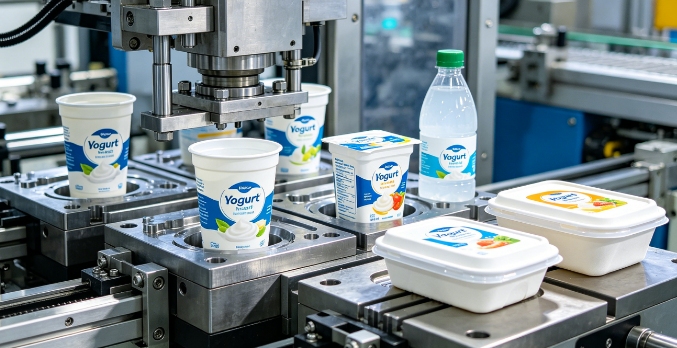
Excellent Durability for Food Packaging Environments
Food and beverage packaging often faces challenging storage and transportation conditions. Containers may be exposed to water, oil, low temperatures, friction, or repeated handling before reaching consumers. This is where in mold labeling demonstrates clear advantages.
- The label becomes permanently fused with the plastic surface, preventing peeling or bubbling during refrigeration and freezing.
- Moisture resistance helps maintain clean and readable graphics on yogurt cups, ice cream containers, and beverage tubs.
- Oil and grease exposure has less impact on the package appearance, making it highly suitable for sauces, ready meals, and takeaway food containers.
- Scratch-resistant surfaces protect branding and nutritional information during transportation and retail shelf display.
Since the decorative layer is integrated into the product itself, manufacturers can not only achieve more durable packaging quality but also reduce complaints resulting from damaged labels.
Strong Visual Appeal and Brand Presentation
Packaging design strongly influences consumer purchasing decisions, especially in supermarkets and convenience stores where products compete directly for attention. Modern food brands require packaging that looks professional, vibrant, and premium.
Key visual advantages include:
- High-definition printing supports detailed graphics, sharp logos, and rich color performance that improve shelf visibility.
- Seamless decoration eliminates wrinkles, air bubbles, and uneven edges commonly associated with adhesive labels.
- Containers can achieve glossy, matte, or textured finishes depending on brand positioning and product style.
- Full-wrap decoration allows brands to maximize advertising space around the entire container surface.
For beverage cups, dairy containers, and snack packaging, these features create a more premium appearance that can help increase consumer trust and purchasing interest.
Improved Production Efficiency and Cost Control
In large-scale food manufacturing, efficiency is essential. Companies must produce large volumes of packaging while controlling labor costs and minimizing waste. In mold labeling helps simplify the production process by combining decoration and molding into a single manufacturing step.
The benefits are particularly noticeable in automated production environments:
- Separate labeling operations are no longer required after molding.
- Automated systems reduce manual handling and improve production consistency.
- Faster production cycles help manufacturers meet high-volume packaging demands.
- Lower defect rates reduce material waste and unnecessary rework costs.
Although the initial equipment investment may be higher than traditional labeling systems, many companies achieve long-term savings through reduced labor requirements and improved operational efficiency.
Safety and Sustainability Advantages
Food packaging materials must meet strict hygiene and environmental standards. Modern consumers are also paying closer attention to sustainable packaging practices, encouraging manufacturers to adopt greener technologies.
Several environmental and safety benefits make this process attractive for food packaging applications:
- Glue-free decoration reduces the use of additional chemicals in packaging production.
- Many plastic containers and label materials can be recycled together, simplifying recycling processes.
- Integrated labeling lowers the risk of label contamination or separation during food handling.
- Reduced production steps can help decrease overall energy consumption.
These characteristics support global trends toward environmentally responsible manufacturing while helping brands improve their sustainability image in the marketplace.
Conclusion
Overall, in mold labeling is highly suitable for food and beverage packaging because it combines durability, attractive visual design, efficient manufacturing, and environmental advantages in a single solution. The technology performs especially well in applications that require moisture resistance, long-lasting graphics, and premium branding presentation. As food manufacturers continue to focus on automation, sustainability, and product differentiation, this advanced labeling method is expected to play an increasingly important role in modern packaging production. For companies seeking stronger packaging performance and better consumer appeal, in mold labeling provides a reliable and future-oriented solution.
0