
When you think of Oktoberfest, you picture enormous mugs of beer, Lederhosen, Dirndls, huge beer tents, and brass music. Nonetheless, Oktoberfest is not only about drinking beer, but the aspects connected with it also have much in common with the history and culture of Bavaria over more than two hundred years.
Starting with the party after the royal wedding in 1810, the traditions of Oktoberfest have been transformed. Nowadays, there is a big party with the participation of beer, traditional outfits, food, and music.
This royal celebration has been transformed into a popular festivity over time and now is a major part of Bavarian tradition as well as an internationally recognized symbol of global festival culture.
1. How Oktoberfest Traditions Began in Bavaria
It was not about drinking beer, but about performing a marriage ceremony between the ruling families.
From a Marriage in 1810 to a Festive Occasion
It was on October 12, 1810, that the Crown Prince of Bavaria, Ludwig, was wedded to Princess Therese of Saxe-Hildburghausen. Horse races formed part of the major celebrations that took place at the fields outside the city. The field later got its name after Princess Therese as Theresienwiese.
The Oktoberfest takes place in that field even today, and the residents of the area often refer to Oktoberfest as “Wiesn.” This festival has since become popular and has evolved from time to time into a public celebration.
Oktoberfest Mostly Begins in September
Despite the name, the current Oktoberfest is not celebrated throughout October. It begins on the second weekend of late September and runs until the first week of October. Moving the party to September creates good weather conditions with a lot of sunlight during daytime activities. The current Oktoberfest takes an average of 16 to 18 days.
Bavarian Dress Formed an Important Element in the Carnival Identity
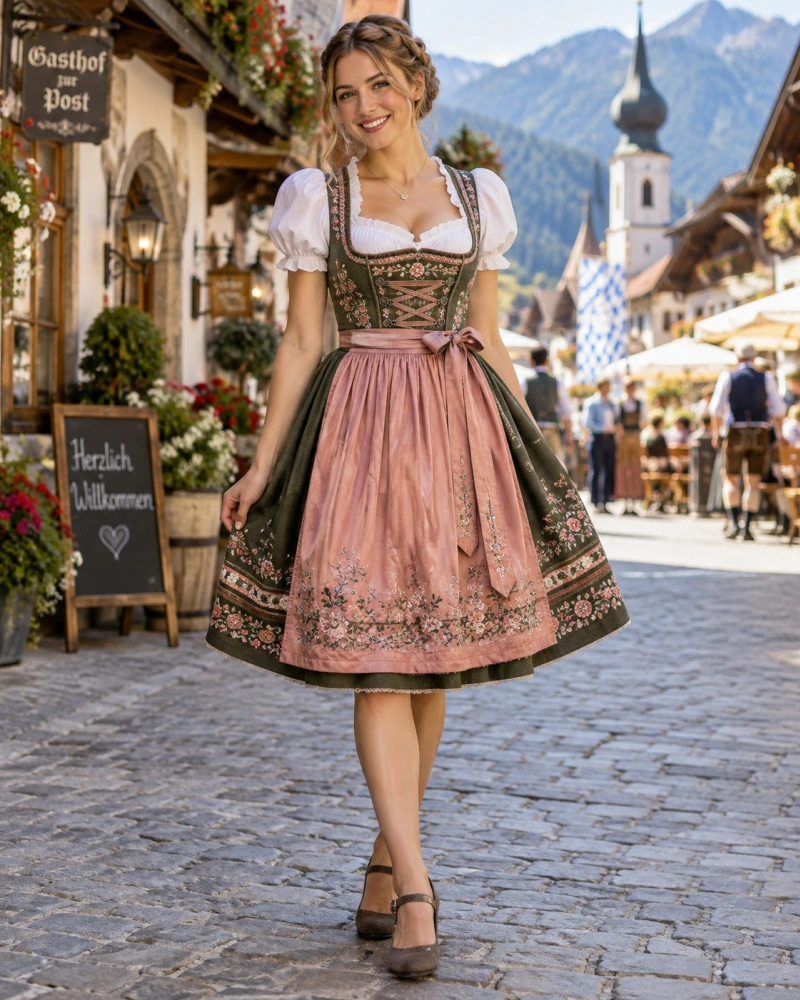
The traditional clothing has now turned out to be one of the main features of Oktoberfest traditions. Traditional leather shorts are known as Lederhosen and are worn with a shirt, suspenders, traditional footwear, knee-length stockings, or a jacket.
Several components of the Dirndl are worn by women: Blouse + Bodice/Dress + Skirt + Apron
Even the modern Lederhosen and Dirndls are made in different fabrics, colors, and styles; however, their cultural identity always remains the same – Bavarian.
2. Beer Steins and Beer Culture in Oktoberfest Traditions
One of the most famous items related to Oktoberfest traditions is beer. However, certain practices connected with drinking beer are often misinterpreted outside of Germany.
Is It Really a Beer Stein?
The large beer container from Germany is termed “beer stein” in English. During the current Munich Oktoberfest, the drinking cup that has gained prominence is known as a Maßkrug (glass Maß). The average volume of one Maß is approximately 1 litre of beer
However, the traditional beer steins are usually made from stoneware, ceramics, and sometimes glass.
| Drinking Vessel | Typical Material | Main Feature |
| Traditional Beer Stein | Ceramic / Stoneware / Glass | Decorative, sometimes with a lid |
| Maßkrug | Thick Glass | Large handle, about 1 liter |
| Souvenir Stein | Ceramic / Glass | Decorative or collectible |
While the term “beer stein” may still be recognized culturally, the Maßkrug can better serve to describe the current version of the vessel used at the Munich festival.
Connection between Oktoberfest and Beer in Munich
Oktoberfest beer has many similarities with the brewing culture in Munich.
The six major breweries of Munich, associated traditionally with the beer that is served in the Oktoberfest celebrations, are as follows:
• Augustiner
• Hacker-Pschorr
• Hofbräu München
• Löwenbräu
• Paulaner
• Spaten
Therefore, Oktoberfest beer is not merely “German beer.”
Beer Tents Create a Shared Social Experience
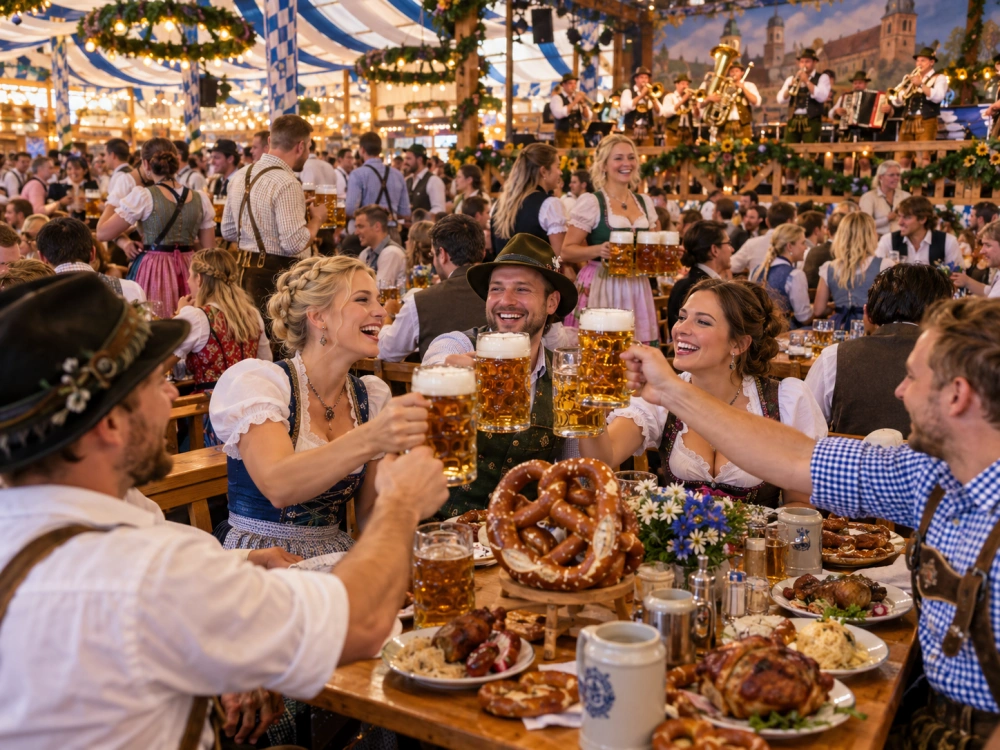
The beer tent at Oktoberfest is much bigger than the average temporary tent. Big tents can hold several thousand people, with some big events having seating capacities of up to 10,000 both inside and outside the tent, depending on the size of the tent. Communal tables help people to mix, while drinking, eating, and listening to music make the atmosphere social.
Another part of the culture is the traditional drinking salute of “Prost.”
Oktoberfest beer culture thus consists of: Beer + Communal Tables + Music + Toasting = Social Experience
Food and Music Complete the Atmosphere
However, beer is just a portion of the entire table setting. Some of the traditional Bavarian foods that are eaten during Oktoberfest include the following:
• Brezn – Bavarian Pretzel
• Hendl – Roast Chicken
• Schweinshaxe – Pork Knuckle
• Obatzda – Cheesy Spread
• Sausages
• Almonds roasted in a special recipe
Music is equally significant. Traditional brass bands, folk music, and popular music all inspire people to sing, toast, and socialize within the tents.
3. How Oktoberfest Traditions Became a Global Festival Culture
The Oktoberfest customs, after more than two centuries, have travelled far from Munich and Bavaria.
From Bavaria to the World
There are Oktoberfest-themed celebrations that have been organized in various nations like the USA, Canada, Brazil, and Australia.
International festivals tend to retain many easily recognizable aspects: Beer + Bavarian Dress + Pretzels + Music + Beer Mugs
These aspects give a typical Oktoberfest-themed celebration an instantly recognizable feel, regardless of whether a person knows much about the festival or not.
Global Oktoberfest Celebrations Adapt to Local Culture
International Oktoberfest festivals are not always recreations of the original Munich festival. They can involve regional beers, foods, music, and entertainment.
This process can be depicted as follows: Local Traditions → International Awareness → Local Interpretation
In an obvious way, it demonstrates how festival traditions transform during their transfer from one culture to another.
Bavarian Culture Is Not All German Culture
A key point to be made is: Bavaria ≠ All of Germany
Germany has various traditions of food, fashion, dialects, and festivals in different parts of the country. Lederhosen, Dirndls, Maßkrüge, Brezn, and the entire Oktoberfest image are more specific to Bavaria. In other words, Oktoberfest can be considered more of a Bavarian custom that has come to represent the country as a whole around the world.
Conclusion
The Oktoberfest tradition has existed for over 200 years, since it was started by the Bavarian royal wedding in 1810. The culture of beer steins, Maßkrüge, Lederhosen, Dirndls, Bavarian food, and brass music has become popular not just because they add to the festive mood, but also because they represent the unique traditions of the festival.
Even though Oktoberfest has traveled all over the world, its origin is still very Bavarian. Though Oktoberfest is known for its beer, the traditions at the table determine its identity.
0