
In modern electronic devices, communication systems, and industrial automation equipment, pre-connected connectors are widely used due to their ease of installation, high reliability, and low maintenance requirements. For engineers, a critical consideration is whether these connectors can maintain stable performance after repeated mating cycles. This article provides a detailed analysis of how pre-connected connectors retain their functionality under repeated use, highlighting the mechanisms that ensure long-term reliability.
Performance Challenges of Pre-connected Connectors
The reliability of a connector is vital to the overall stability of an electronic system. The main performance challenges are:
- Electrical Performance
Electrical performance is a key indicator of connector reliability. It includes stable contact resistance and consistent signal transmission. With repeated mating cycles, contacts may experience wear or minor corrosion, leading to increased resistance, signal degradation, or power transmission issues. For high-speed data and high-frequency applications, even slight performance deterioration can significantly affect system operation. - Mechanical Performance
Mechanical performance determines a connector’s durability under repeated use. Connectors must maintain appropriate mating force—tight enough to ensure reliable contact but not so tight that it causes damage. Factors such as spring contact design, contact spacing, and housing structure directly affect mechanical stability over time. - Environmental Adaptability
Electronic systems often operate under varying temperatures, humidity, and vibration. Connectors must resist oxidation, corrosion, and mechanical stress to maintain long-term performance. Environmental factors can accelerate material aging or contact wear, potentially compromising reliability if not properly addressed.
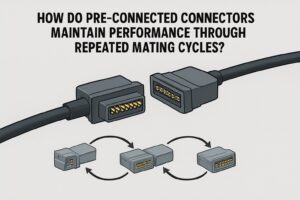
Over repeated mating cycles, connectors can experience contact wear, spring fatigue, contact deformation, or housing damage, all of which can reduce overall system stability.
How Pre-connected Connectors Maintain Performance
To address these challenges, pre-connected connectors are engineered with several key features:
- High-Quality Materials
Using highly conductive metals (such as gold-plated copper) and wear-resistant plastics minimizes contact wear and ensures low resistance and stable signal transmission over repeated use. Material properties, including hardness, elasticity, and corrosion resistance, directly influence long-term connector reliability. - Optimized Structural Design
Pre-connected connectors often incorporate spring contacts, resilient contact designs, or multi-point contact mechanisms to guarantee reliable electrical connections during each mating cycle. Structural design also optimizes force distribution, reducing mechanical wear and enhancing repeated mating durability. - Surface Treatment Technology
Gold, silver, or nickel plating effectively prevents oxidation and corrosion on contact surfaces, maintaining low contact resistance and consistent signal performance. For high-speed or high-frequency applications, this surface treatment is crucial, as minor oxidation or corrosion can lead to signal attenuation or increased error rates. - Rigorous Testing and Validation
During production, pre-connected connectors undergo hundreds to thousands of mating cycles to verify stable electrical and mechanical performance. Additional tests may include vibration, temperature-humidity cycling, and environmental aging to ensure reliability under diverse operating conditions.
Maintenance and Usage Recommendations
Even high-quality pre-connected connectors benefit from regular maintenance to ensure long-term reliability. It is important to periodically inspect connectors for proper mating alignment and check for any signs of contact wear or deformation. Cleaning the contact surfaces with appropriate, non-abrasive tools can remove dust, dirt, or minor oxidation that may accumulate over time. Operators should also avoid applying excessive force or inserting connectors at incorrect angles, as this can accelerate wear or potentially damage the contacts.
In environments with dust, moisture, vibration, or temperature fluctuations, additional protective measures are recommended. Using protective covers, sealed connector variants, or environmental shielding can prevent contaminants from affecting the contact surfaces and reduce the risk of corrosion or mechanical failure. By following these maintenance practices and proper handling guidelines, pre-connected connectors can maintain stable electrical and mechanical performance, reduce the risk of system downtime, and extend their overall service life.
Conclusion
Even under repeated mating cycles, pre-connected connectors continue to deliver reliable electrical and mechanical performance due to high-quality materials, carefully optimized structural design, and advanced surface treatment. Choosing premium pre-connected connectors ensures consistent signal transmission, stable contact resistance, and mechanical durability. When combined with proper usage and regular maintenance, these connectors help minimize system downtime, reduce long-term maintenance costs. And significantly extend the overall service life of electronic and industrial systems.
0