
What Is A Non-Contact Thermometer?
A non-contact thermometer is a device that measures temperature without needing to touch the object or person being measured. This feature makes it particularly useful in situations where hygiene is paramount, such as during a pandemic or in a clinical setting. The contactloze thermometer operates by detecting infrared radiation emitted from the surface of an object or body.
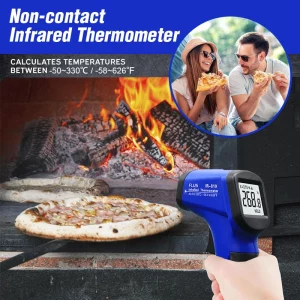
The Science Behind Infrared Thermometry
At the core of the contactloze thermometer’s functionality is the principle of infrared thermometry. All objects emit infrared radiation as a function of their temperature. The higher the temperature, the more infrared radiation is emitted. Non-contact thermometers are designed to detect this radiation and convert it into a temperature reading.
How It Works
- Infrared Detection: When you point a contact lens thermometerat a person or object, it captures the infrared radiation emitted from the surface. This radiation is collected by a lens, which focuses it onto a detector.
- Conversion to Temperature: The detector, often a thermopile or a pyroelectric sensor, converts the infrared radiation into an electrical signal. This signal is then processed by the thermometer’s internal circuitry.
- Calibration and Display: The device uses a calibration algorithm to convert the electrical signal into a temperature reading. This reading is displayed on a digital screen, allowing for quick and easy interpretation.
Factors Affecting Accuracy
While non-contact thermometers are generally reliable, several factors can influence their accuracy:
Distance: The distance between the thermometer and the object being measured can affect the reading. Most contactloze thermometers have a specified distance-to-spot ratio, which indicates how far away you can be while still obtaining an accurate reading.
Environmental Conditions: Ambient temperature, humidity, and even airflow can impact the accuracy of the measurement. For instance, if the thermometer is used in a very cold or hot environment, it may not provide an accurate reading.
Surface Characteristics: The emissivity of the surface being measured plays a crucial role. Different materials emit infrared radiation differently. For example, shiny or reflective surfaces may yield inaccurate readings compared to matte surfaces.
Applications Of Non-Contact Thermometers
The versatility of contactloze thermometers makes them suitable for various applications:
- Healthcare
In healthcare settings, non-contact thermometers are invaluable for quickly screening patients for fever, a common symptom of many illnesses. Their ability to provide rapid readings without physical contact minimizes the risk of cross-contamination, making them ideal for use in hospitals, clinics, and during public health emergencies.
- Food Safety
In the food industry, contactloze thermometers are used to ensure that food is cooked to the appropriate temperature, preventing foodborne illnesses. They can quickly measure the temperature of surfaces, such as grills or frying pans, ensuring that food is prepared safely.
- Industrial Applications
In industrial settings, non-contact thermometers are used to monitor the temperature of machinery and equipment. Overheating can lead to equipment failure, so regular temperature checks are essential for maintenance and safety.
- Home Use
Many households have adopted contactloze thermometers for everyday use, especially for monitoring the health of family members. Their ease of use and quick results make them a popular choice for parents keeping an eye on their children’s health.
Conclusion
The contactloze thermometer represents a significant advancement in temperature measurement technology. By utilizing the principles of infrared thermometry, these devices offer a fast, hygienic, and versatile solution for a wide range of applications. As we continue to navigate a world increasingly focused on health and safety, the importance of non-contact thermometers will only grow. Understanding their working principle not only enhances our appreciation for this technology but also empowers us to use it effectively in our daily lives.
0