
Every year on the 14th day of February, there is an abundant supply of red roses, chocolates, and Valentine’s cards in florists, supermarkets, and gift stores. The items mentioned above are now associated with the celebration of Valentine’s Day, although historically each item became related to Valentine’s Day on different occasions.
Throughout the centuries, from the romantic verses of the Middle Ages to the commercially manufactured cards and the decorative chocolate boxes of the 19th century, Valentine’s Day gifts have had a long history.
Gifts on Valentine’s Day reveal their character not only as products but as representatives of culture, emotion, and evolving practices.
1. How Valentine’s Day Gifts Changed Through History
Modern Valentine’s Day gifts have not been invented on one particular day by one individual. They have evolved gradually through literature, social practices, technology, and commerce.
From Romantic Poetry to Gift Giving
The association of Valentine’s Day with romantic love dates back to the medieval literature of Europe.
In about 1382, an English poet, Geoffrey Chaucer, wrote a poem making associations between Valentine’s Day and birds pairing off. It does not imply that Chaucer “invented” Valentine’s Day as we know it now, but Chaucer’s work can be considered a significant literary association of the day with courtly love. More and more people began expressing their feelings with poetry, letters, flowers, and presents.
The evolution can be put down as: Poetry of Love → Love Letters → Flowers and Presents → Commercial Valentine’s Day Presents
The 19th Century Changed Valentine’s Day Gifts
Industrialization played a role in the evolution of Valentine’s Day from being merely a personal holiday to becoming a more widespread cultural holiday.
Advances in the field of printing, the postal service, and the production of paper were some factors that contributed to making the manufacture of Valentine’s Day cards easier and more affordable in the nineteenth century. Esther Howland is known for introducing decorative Valentine’s Day cards in America during the 1840s.
Chocolates were also witnessing a revolution at that time. The British chocolate maker, Richard Cadbury, is associated with the advent of Valentine’s Day chocolates in the form of boxes.
Over time, familiar gift traditions emerged:
| Period | Common Valentine Expression |
| Late Middle Ages | Poetry and romantic writing |
| 17th–18th centuries | Letters, flowers, small gifts |
| 19th century | Commercial cards and chocolate boxes |
| 20th century | Flowers, chocolate, jewelry, cards |
| Today | Traditional, personalized, and digital gifts |
How Red Roses Became a Romantic Symbol
Flowers have long provided a way to express emotions without words.
During the 19th century, interest in floriography, or the “language of flowers,” grew in Europe and North America. Different flowers and colors were associated with particular emotions and messages. Red roses became strongly associated with romantic love, passion, affection, and commitment, eventually making them one of the most recognizable Valentine’s Day gifts.
2. Why Roses, Chocolate, and Cards Are the Perfect Gift Combo for Valentine’s Day
This is because roses, chocolates, and cards serve varied purposes and do not duplicate each other in terms of their messages. Each of them offers its own way of expressing oneself.
Roses Create a Visual Message
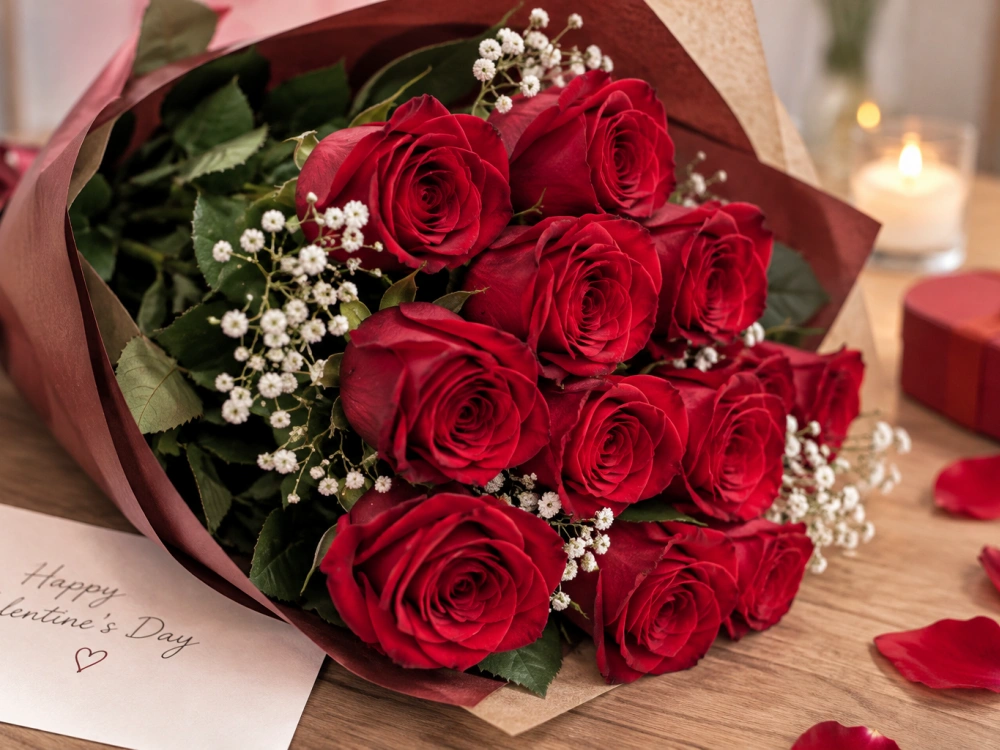
Roses communicate through color, arrangement, and appearance.
Modern flower-gifting culture commonly associates different rose colors with different ideas:
| Rose Color | Common Modern Association |
| Red | Romantic love/passion |
| Pink | Admiration/affection |
| White | Sincerity/purity |
| Yellow | Friendship/warmth |
These meanings are not universal rules and may vary across cultures, but they allow flowers to be personalized for different relationships.
Chocolate Creates a Shared Experience
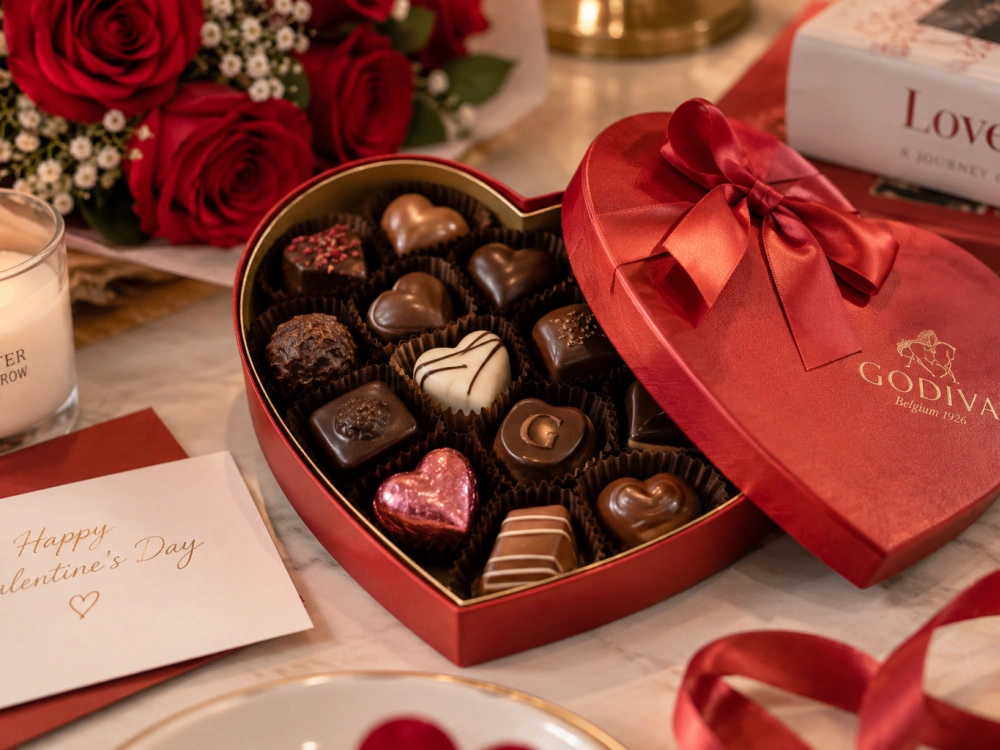
And chocolate adds yet another dimension since it can be tasted. The emergence of decorative chocolate boxes in the 19th century played a role in the evolution of chocolate from food into a gift, presented with great care and romance.
It could serve as: Food + Packaging + Romantic Symbol + Gift
The heart-shaped boxes contributed to this idea, making the packaging a Valentine. It is also a perfect choice for a gift due to the availability of chocolate in different flavors and kinds. It can be presented either on its own or along with flowers and cards.
Cards Make the Message Personal
Where roses speak in visual terms and chocolates in sensory terms, cards offer words. Before the emergence of mass-produced greeting cards, Valentine messages were written in poetry, personal letters, and notes. Even today, there is something about a physical card that holds some value that is hard to duplicate with a quick message. Handwritten cards may keep a date, a person’s name, a private joke, or memories alive for years.
All three classic gifts form a perfect package as follows:
• Roses: See
• Chocolate: Taste
• Cards: Read
3. Valentine’s Day Gifts Mean Different Things Across Cultures
February 14 is celebrated around the globe in many places; however, the custom of exchanging Valentine’s Day gifts is not universal.
Gift Traditions Change Across Countries
In the West, flowers, chocolates, cards, jewelry, and even dinner dates are popular options.
However, Japan has created its own culture for giving chocolates on Valentine’s Day. Traditionally, it is women who give chocolates to men on February 14, and there are different kinds of chocolate for different relationships. Subsequently, on March 14, people in Japan and some other Eastern nations celebrate White Day.
Modern Valentine’s Gifts Are Becoming More Personal
Valentine gifts today have expanded beyond the traditional three items. Possible Valentine gifts include:
• Flowers and chocolates
• Cards
• Jewelry and perfume
• Personalized gifts
• Eating out
• Travel and activities
• Virtual gifts
For many individuals, sentimental value is as important as cost. A handmade card referencing a common experience is likely to hold greater significance than an expensive gift that does not contain sentiment. Virtual communication has transformed celebrations. Instant messaging, social networking, and e-cards have made it easier for people to express their feelings through virtual means. However, physical gifts are still popular since they help in creating meaningful experiences.
Conclusion
Though roses, chocolates, and cards are essential elements of Valentine’s Day today, many years of cultural development were necessary to turn these customs into popular traditions. Starting from medieval romance described in poems and ending up with the romantic cards and boxes of chocolates in the nineteenth century, every generation added its own way of showing love.
It is the diversity of experiences that made roses, chocolates, and cards so popular; roses express feelings with the help of vision, chocolates are made to be enjoyed together, while cards keep personal messages. A rose can express feelings, chocolates can sweeten the moment, but the words of love always make Valentine’s presents unforgettable.
0