
A spice filling machine plays a crucial role in packaging a wide variety of seasoning products used in households, restaurants, and large-scale food processing factories. From fine powders to coarse granules, spices come in many forms, and manufacturers often question whether a spice filling machine can handle all these different types effectively. The answer is yes—modern filling systems are designed with advanced metering, vibration control, and dust-proof mechanisms to accommodate a broad range of spice textures and consistencies. Understanding what types of spices can be processed helps businesses choose the right equipment for their production needs.
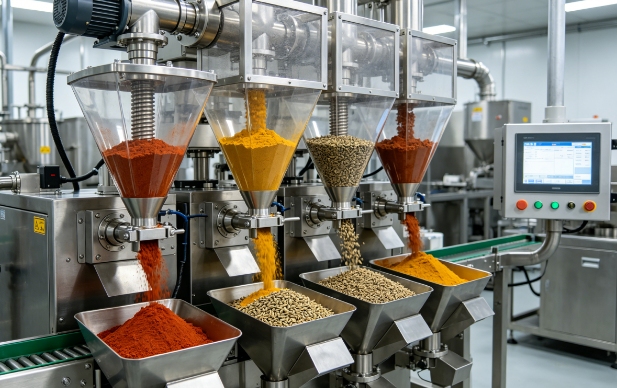
Fine Powder Spices and Lightweight Seasonings
One of the most common applications of a spice-filling machine is handling fine powder spices, which require high precision and dust control.
- Examples include chili powder, turmeric powder, black pepper powder, and cinnamon powder.
These spices are extremely light and prone to airborne dispersion, requiring sealed filling environments. - High-precision auger filling system:
The machine uses a screw-based dosing mechanism to accurately measure small quantities of powder without overflow or wastage. - Dust control technology:
Advanced machines are equipped with dust suction systems to maintain a clean working environment and prevent product loss. - Anti-clogging hopper design:
Specially designed storage hoppers ensure smooth powder flow, avoiding blockages caused by static or humidity.
These features make spice filling systems highly suitable for fine and lightweight powdered ingredients.
Granulated and Coarse Spice Materials
A spice filling machine is also widely used for granulated spices that require a stable flow and consistent weight control.
- Common granular spices include sea salt, sugar-based seasoning blends, cumin seeds, coriander seeds, and mustard seeds.
These materials are heavier than powders and require controlled vibration for smooth feeding. - Vibration-assisted feeding system
Machines often use vibration plates or rotating mechanisms to ensure even distribution and prevent material bridging inside the hopper. - Weighing accuracy control
Load cell-based systems ensure each package receives the correct weight, even when particle size varies. - Flow adjustment flexibility
Operators can adjust vibration intensity and feed speed based on spice size and density.
This allows consistent performance when handling medium to coarse spice products.
Mixed Spices and Seasoning Blends
Modern food production often involves complex spice mixtures, and a spice-filling machine is capable of handling these blended products efficiently.
- Multi-ingredient seasoning mixes:
Includes curry powder blends, barbecue seasoning, soup base powders, and instant food flavoring mixes. - Uniform mixing compatibility:
Machines are designed to maintain consistency in mixed spices, preventing ingredient separation during filling. - Gentle handling system:
Low-impact filling prevents breakdown of delicate spice structures and preserves flavor quality. - Batch control precision:
Advanced systems ensure each package contains the correct ratio of ingredients, even in multi-component blends.
These capabilities make filling machines essential for modern seasoning manufacturers.
Sticky, Moist, or Oil-Coated Spice Variants
Some spices are processed with oils or moisture, and a spice filling machine can also handle these more challenging materials with the right configuration.
- Examples include wet chili flakes, herb blends with oil coating, and specialty marinades or spice pastes.
- Anti-stick hopper design:
Special coatings and smooth internal surfaces prevent material buildup inside the machine. - Controlled feeding speed:
Slower and more stable filling cycles help maintain accuracy for sticky substances. - Temperature-assisted flow systems (optional):
Some machines use mild heating to improve flowability and reduce viscosity issues. - Rotary valve sealing technology:
Prevents leakage and ensures clean, consistent filling for semi-moist products.
These enhancements allow the machine to adapt to more complex spice textures.
Specialized Industrial Spice Applications
Beyond standard spices, a spice filling machine is also used in specialized industrial applications that require high precision and hygiene standards.
- Pharmaceutical herbal powders:
Some machines are adapted for medicinal spice powders used in traditional remedies. - Food industry premix ingredients:
Used for instant noodles, sauces, and ready-to-cook meal seasonings. - Export-grade packaged spices:
Ensures compliance with strict weight and packaging standards for international markets. - Custom formulation spices:
Allows manufacturers to handle proprietary spice blends with consistent accuracy.
These applications highlight the versatility of modern spice filling systems across industries.
Conclusion
In conclusion, a spice filling machine is highly versatile and capable of handling a wide range of spice types, including fine powders, granules, mixed seasonings, sticky blends, and even specialized industrial formulations. With advanced technologies such as auger filling, vibration feeding, dust control, and precision weighing systems, modern machines ensure accurate, efficient, and hygienic packaging across diverse production needs. As the global food industry continues to grow and diversify, spice-filling equipment remains a critical solution for manufacturers seeking consistent quality, improved productivity, and scalable production capabilities.
0